
Plants
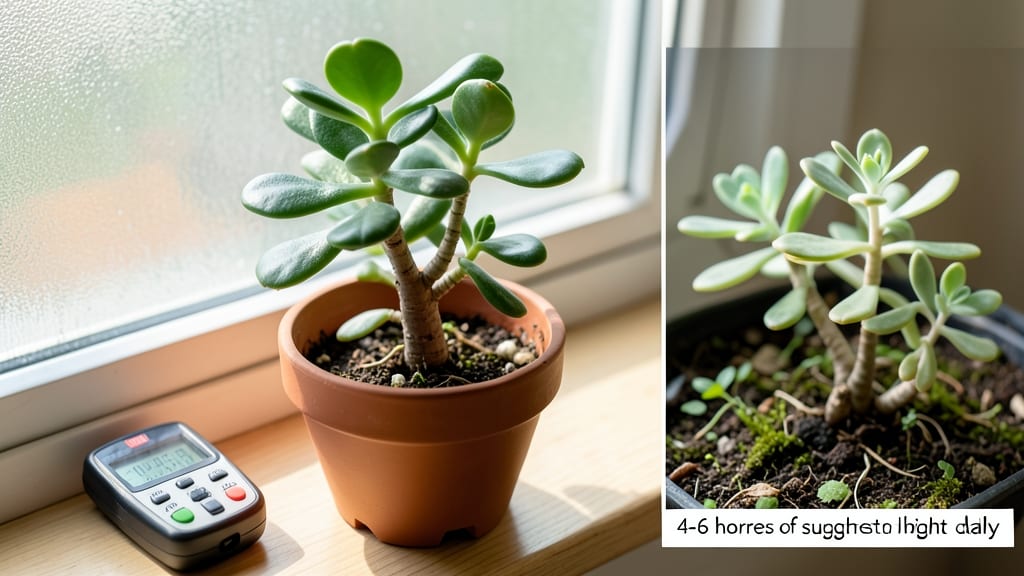
To keep your Jade Plant 🌿 thriving, you might be surprised to learn that how much light does a jade plant require isn’t just about quantity—it’s about quality.
This hardy succulent needs bright indirect sunlight for 4-6 hours daily, but too much direct sun can scorch its leaves, while too little leaves it stretching toward the light like a sleepy cat reaching for a sunbeam.
If you’ve ever watched your Jade Plant’s leaves turn pale or its stems stretch awkwardly, you’re not alone. Many plant parents struggle with this balance, especially in Zone 6a climates where seasons shift dramatically.
The key is understanding how to adjust its placement—whether indoors near a window or outdoors in spring—as the light changes with the seasons.
Let’s break down exactly how much light your Jade Plant truly needs, how to spot the signs of light stress, and the best spots to place it—whether you’re working with a sunny south-facing window or a cozy east-facing nook.
You’ll learn how to give your plant the perfect light recipe for healthy, vibrant growth all year round.
From choosing the right window to supplementing with grow lights when natural light falls short, I’ll share the game-changer tips that have helped my Jade Plants stay lush and happy. Ready to transform your plant’s light situation for the better?

Ideal light requirements for jade plants: bright indirect sunlight explained
A jade plant thrives in bright indirect sunlight, making it perfect for east-facing windows or well-lit rooms. This succulent mimics its desert origins by needing 4-6 hours of sunlight daily to maintain its compact, vibrant growth.
Too little light causes etiolation—those dreaded leggy stems—while too much direct sun can scorch its leaves.
For optimal growth, place your jade plant within 2-3 feet of an east-facing window, where morning sun is gentler. South-facing windows work too, but use a sheer curtain to diffuse harsh afternoon rays.
In winter, when sunlight is weaker, supplement with a grow light for 6-8 hours daily to prevent stretching.
🌿
| Light Condition | Daily Exposure | Best Window | Seasonal Adjustments |
|---|---|---|---|
| Bright Indirect | 4-6 hours | East-facing | Rotate monthly for even growth |
| Direct Morning Sun | 2-3 hours | South-facing (with curtain) | Avoid afternoon sun in summer |
| Low Light | <2 hours | North-facing | Use grow lights 8+ hours/day |
Jade plants adapt to indoor light conditions better than most succulents, but they still need brightness. If your home has low natural light, position your plant near a west-facing window or invest in a full-spectrum LED grow light.
These lights mimic sunlight and prevent the weak, stretched stems that signal light deprivation.
In summer months, your jade plant can handle up to 3 hours of direct afternoon sun if acclimated gradually. Start by placing it outside in dappled shade for a few hours weekly, then increase exposure. This hardens the leaves and reduces the risk of sunburn.
Watch for leaf color changes—healthy jade leaves are thick, glossy, and deep green. Pale or yellowing leaves mean it’s not getting enough light, while brown patches or crisp edges indicate too much direct sun. Adjust the placement or add a light filter immediately to correct the issue.
🪴
For outdoor cultivation, jade plants thrive in USDA zones 9-11 when planted in well-draining soil with full sun. In cooler climates, grow them in containers and bring them indoors before temperatures drop below 50°F.
Even outdoor jade plants need partial shade during peak summer heat to prevent leaf damage.
Pro tip: Rotate your jade plant every 2-3 weeks to ensure even light exposure. This prevents lopsided growth and keeps the plant compact and bushy. A well-lit jade plant will reward you with thick, vibrant leaves and even the occasional pink or white flower!
How to tell if your jade plant isn’t getting enough light (and what to Do)
Your jade plant might be silently begging for more light—even if it looks fine at first glance. Leggy stems and sparse leaves are classic red flags that your plant isn’t getting its 4-6 hours of bright indirect sunlight daily.
These signs often appear when placed too far from windows or in north-facing rooms with minimal light exposure.
Another telltale clue is yellowing leaves, especially on the lower stems. This happens when your jade plant stretches toward light sources, a condition called etiolation.
The leaves may also develop a pale, washed-out color instead of their healthy, vibrant green. If you notice these symptoms, it’s time to reassess your plant’s location.
• Place near east-facing windows for gentle morning sun
• Rotate pot quarter-turn weekly for even growth
• Use sheer curtains to filter harsh afternoon sun
• Supplement with LED grow lights (12-14 hrs/day) in low-light areas
• Leave in north-facing windows (too little light)
• Exposes to hot afternoon sun (causes leaf scorch)
• Ignore stretched stems (sign of chronic light deprivation)
• Use incandescent bulbs (emits too much heat)
If your jade plant is already showing signs of light deficiency, start by moving it closer to a window. An east-facing window is ideal because it provides gentle morning light without the harsh intensity of afternoon sun.
For west or south-facing windows, position your plant 2-3 feet away to avoid direct sunburn.
For urban apartments with limited natural light, consider grow lights as a reliable alternative. A 12-14 hour daily light cycle with a full-spectrum LED bulb can mimic ideal conditions. Place the light 6-12 inches above the plant and adjust the height as it grows to prevent legginess.
Regularly rotate your jade plant every few weeks to ensure even light exposure on all sides. This prevents uneven growth and helps maintain a compact, bushy shape.
If you notice crispy or brown edges on the leaves, it’s a sign of too much direct sunlight, especially during peak afternoon hours.
With these adjustments, your jade plant should show signs of improvement within 2-4 weeks, including thicker stems, darker green leaves, and a more compact growth habit. Consistency is key—monitor your plant’s response and tweak its light exposure as needed.