
Plants
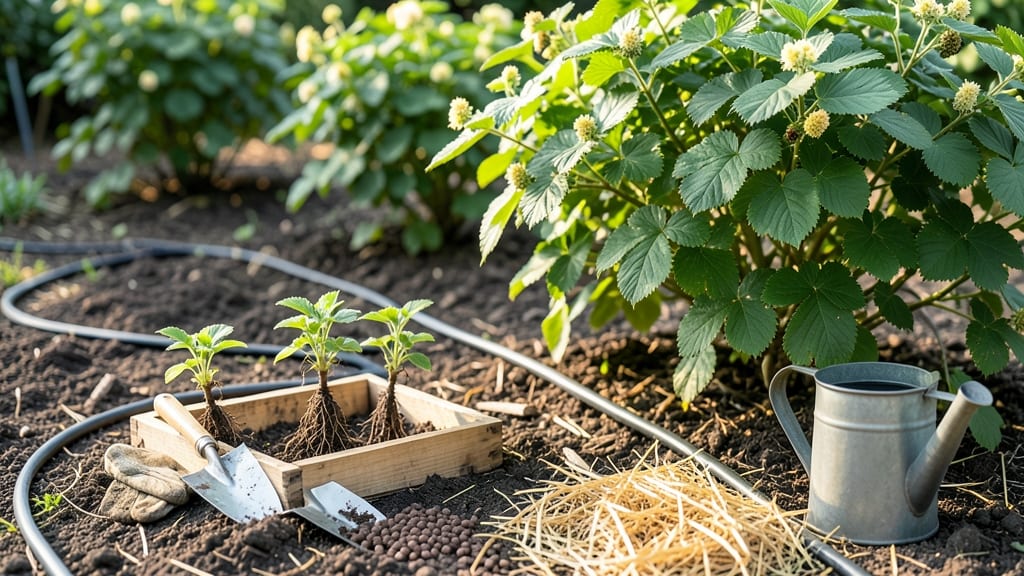
Planting blackberries in Texas at the wrong time can mean the difference between thriving 🫐 canes and struggling vines that barely survive the heat.
The best window for planting—whether you're growing thornless varieties or traditional types—is all about avoiding those brutal summer months when young plants wilt before they even take root.
For most Texas gardeners in zones 8a-10b, late winter to early spring (February through March) is your golden opportunity. This timing lets blackberry roots establish before the real heat kicks in, giving them a fighting chance against our famously intense summers.
But if you're in North Texas, where frosts linger a little longer, you might even squeeze in a fall planting in September or October.
Why does timing matter so much? Because blackberries are sensitive to extreme heat and cold—plant too early, and you risk frost damage; too late, and you're left battling drought stress. I've seen firsthand how a well-timed planting can mean the difference between a bountiful harvest and a season of frustration.
Let me show you exactly how to get it right for your Texas climate.
The key isn't just picking a month—it's understanding how your local microclimate plays into the equation. Whether you're in the Hill Country or the Gulf Coast, we'll break down the best strategies to ensure your blackberries thrive from the moment those canes hit the soil.
Ready to grow like a pro?
Best months to plant blackberries in Texas by variety type
Texas gardeners know blackberries thrive with precise timing—too early, and they’ll wilt in summer heat; too late, and winter frosts can kill young canes. The ideal planting window depends on your blackberry variety and Texas microclimate.
Most gardeners plant in early spring (February–March) or fall (September–October), but adjustments are key for North vs. South Texas.
For thornless varieties like 'Natchez' or 'Chester', aim for February–March in North Texas (zones 7b–8a) to avoid late frosts. Primocane-fruiting types (e.g., 'Arapaho') can handle September planting in South Texas (zones 8b–9a), where winters are milder.
Traditional varieties like 'Triple Crown' need fall planting (October) to establish roots before summer heat.
Your last frost date is critical: North Texas averages February 15, while South Texas sees January 1. Plant 4–6 weeks before your last frost for spring planting or 6–8 weeks before first frost in fall. This ensures canes root firmly before extreme temperatures arrive.
Texas’ USDA zones 7b–9a create regional differences. In North Texas (zones 7b–8a), focus on February–March planting. In Central Texas (zones 8a–8b), extend to March–April. South Texas (zones 9a–9b) can plant as late as October–November due to warmer winters.
Here’s how to match your variety to Texas’ planting zones for maximum success:
If you’re in North Texas (zones 7b–8a), prioritize February–March planting for all varieties. The 10–14 days before last frost is ideal—this gives canes time to root before 90°F+ summers. For South Texas (zones 9a–9b), September–October planting works best, as winters rarely drop below 32°F.
Pro tip: Use black plastic mulch in spring to warm soil faster or straw mulch in fall to insulate roots. Both tricks help extend planting windows by 2–3 weeks in marginal zones. Always check your local frost dates—the Texas A&M AgriLife Extension offers free zone maps for precise timing.
For container gardening, plant thornless varieties in late March–April to avoid overheating pots. Containers dry out faster, so adjust watering to match 100°F+ Texas summers. Use 5-gallon pots with drainage holes and well-draining soil to prevent root rot.
Remember: Fall planting (September–October) is your second-best option—it allows canes to establish roots before summer heat. However, avoid planting in late fall (November–December) in North Texas, as freezing temperatures can damage tender new growth.
🫐
Best months to plant blackberries in Texas by variety type
Texas spans multiple microclimates, so the best planting time for blackberries depends on your location and the variety you choose. In North Texas (zones 7b-8a), where frosts can linger into March, aim for late February to early March to avoid late-season cold snaps.
Meanwhile, gardeners in South Texas (zones 9a-10b) can plant as late as mid-March—the real enemy here is the summer heat, not frost.
For thornless varieties like 'Natchez' or 'Arapaho', early spring planting (February-March) gives roots time to establish before the brutal Texas summers. These varieties are popular because they’re easier to harvest, but they still need that head start.
If you're growing primocane-fruiting types like 'Prime-Ark Freedom', fall planting (September-October) can work too—they produce fruit on new canes, which can handle cooler temps better.
Here’s how Texas’ two main regions differ:
| Variety Type | Best Planting Window | Key Consideration | Texas Region Fit |
|---|---|---|---|
| Thornless (e.g., 'Natchez') | Late February–Early March | Avoid frost damage; establish roots before summer heat | North & Central Texas |
| Primocane-Fruiting (e.g., 'Prime-Ark Freedom') | September–October (fall) or February–March (spring) | Fruit on new canes; fall planting avoids summer stress | All regions (adjust timing) |
| Traditional (e.g., 'Cheyenne') | Early March–Mid-April | Balances frost risk and heat; needs strong root system | North & Central Texas |
Pro tip: If you’re in East Texas (zone 8a), where humidity is high, plant in late winter to avoid fungal diseases that thrive in wet springs. Meanwhile, West Texas gardeners (zone 8b+) can push planting to mid-March—the dry air helps young plants establish faster.
Always check your local last frost date (typically February 15 in North Texas, January 1 in South Texas) and plant 2-3 weeks after to be safe.
Fall planting is a secondary option for primocane varieties, but it’s riskier in North Texas due to early frosts. If you choose this route, plant in September and protect young canes with mulch or row covers if frost is forecasted.
I’ve seen fall-planted blackberries thrive in South Texas, where mild winters are the norm, but North Texas gardeners should stick to spring.
Remember: Bare-root canes (the most common planting method) need to establish roots before Texas’ 100°F+ summers hit. If you plant too late, your blackberries will spend their first critical months fighting drought instead of growing.
For the best results, align your planting with your variety’s needs and your local climate—your future harvest will thank you!