
Watering
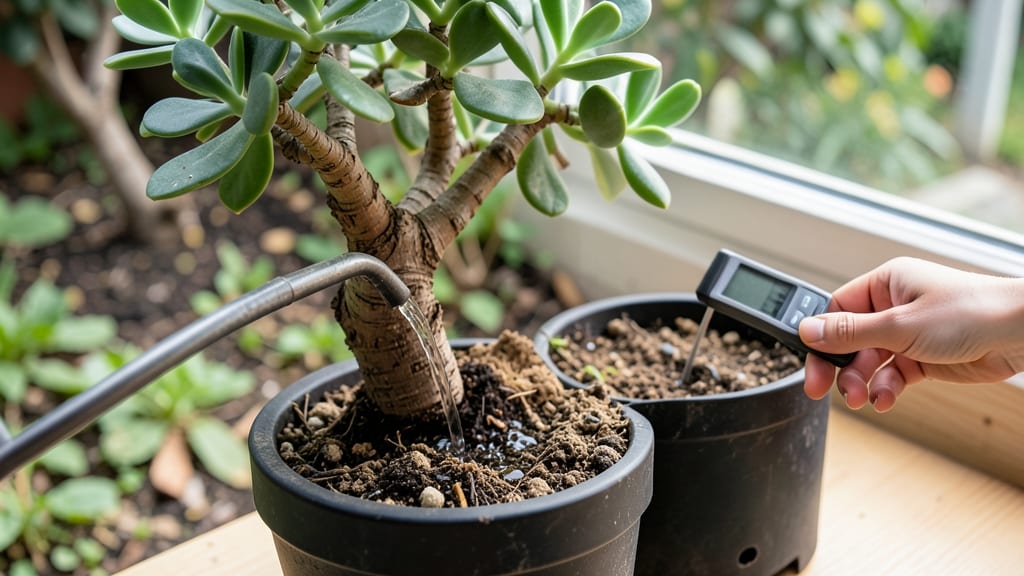
To keep your Jade Plant 🌿 thriving, figuring out how much water it actually needs is the key—because most people either drown it or leave it parched.
This succulent stores water in its leaves, so a strict schedule isn’t just helpful; it’s essential for avoiding those telltale signs of stress like wrinkled leaves or mushy stems.
I’ve learned the hard way that jade plants in USDA Zone 6a need a delicate balance—especially during spring, when growth kicks into high gear.
Whether you’re planting yours in March or caring for an established one, the right watering routine can mean the difference between a lush, happy plant and one that slowly declines.
In this guide, I’ll break down the exact watering schedule you should follow, including how often to water based on the season and what to watch for.
You’ll discover the easiest techniques to check soil moisture, adjust for indoor vs. outdoor conditions, and even troubleshoot common mistakes before they become irreversible.
By the end, you’ll have a clear, actionable plan to water your Jade Plant just right—no guesswork, no overthinking. Let’s get started.
Jade plant watering frequency by season: a month-by-month guide
Jade plants thrive on neglect—literally! As a succulent, it stores water in its thick, plump leaves, making it far more resilient to drought than most houseplants. But finding the right balance between underwatering and overwatering can feel like walking a tightrope.
The key lies in understanding how your jade plant’s water needs shift with the seasons and its environment.
Indoor jade plants typically need water every 2-3 weeks in spring and fall, while outdoor plants may go 4-6 weeks without water during summer’s heat. The trick? Always check the soil before watering.
Stick your finger 1-2 inches deep—if it feels dry, it’s time to water. If damp, wait another week. Let’s break down the exact schedule you should follow.
🌱 Pro Tip: Jade plants in terracotta pots dry out faster than those in ceramic or plastic. Adjust your watering frequency accordingly.
| Season | Indoor Watering Frequency | Outdoor Watering Frequency | Soil Check | Watering Time |
|---|---|---|---|---|
| Spring (March-May) | Every 2-3 weeks | Every 3-4 weeks | Finger test: dry 1-2 inches deep | Morning (9-10 AM) |
| Summer (June-August) | Every 3-4 weeks | Every 4-6 weeks | Wait until soil is bone-dry | Late afternoon (4-5 PM) |
| Fall (September-November) | Every 3-4 weeks | Every 4-5 weeks | Finger test: dry 1 inch deep | Morning (9-10 AM) |
| Winter (December-February) | Every 4-6 weeks | Every 6-8 weeks | Only water if soil is completely dry | Morning (10-11 AM) |
Notice how summer and winter require the least frequent watering? That’s because jade plants enter a dormant phase in winter and conserve water during peak heat. In summer, the intense sunlight actually helps the plant retain moisture longer. Always prioritize morning watering to reduce evaporation and prevent fungal growth.
If your jade plant is in a south-facing window, it may need water slightly more often than the schedule above. Conversely, a north-facing window means you can stretch out the time between waterings.
The goal is to mimic the plant’s natural desert-like conditions, where water is scarce but sunlight is abundant.
Another critical factor is your pot size. A jade plant in a 6-inch pot will dry out faster than one in a 10-inch pot. For larger pots, you can extend the time between waterings by 1-2 weeks.
Always use a pot with drainage holes—this is non-negotiable for preventing root rot.
Here’s a quick rule of thumb: If your jade plant’s leaves start looking wrinkled or shriveled, it’s thirsty. But if they’re yellowing or mushy, you’ve overwatered. We’ll dive deeper into these signs in the next section, but for now, trust your finger over a calendar.
Your jade plant will thank you with glossy, vibrant leaves and steady growth.
💧 Remember: It’s always better to underwater than overwater a jade plant. Succulents are masters of survival—they’d rather go without than drown.
Best watering methods for jade plants: techniques to prevent root rot
Jade plants are famously drought-tolerant, but that doesn’t mean you can ignore their watering needs entirely. The key is using the right techniques—like bottom-watering and proper soil checks—to avoid root rot while keeping those plump, healthy leaves.
Over the years, I’ve perfected my approach, and I’m sharing it with you to save you from the heartbreak of a soggy, mushy jade plant.
First, always use a pot with drainage holes. Without them, excess water pools at the roots, creating the perfect conditions for rot. If your current pot lacks drainage, transfer your jade plant to one that does—it’s a small change that makes a huge difference.
I also recommend using a terracotta pot, which breathes better than plastic and helps prevent moisture buildup.
- ✔️ Use a pot with drainage holes
- ✔️ Water only when soil is completely dry (stick your finger 1-2 inches deep)
- ✔️ Water deeply until it drains from the bottom
- ✔️ Empty the saucer after 10 minutes to prevent soggy roots
- ✔️ Water in the morning to allow excess moisture to evaporate
💧 Pro Tip: Bottom-watering reduces the risk of fungal diseases by keeping leaves dry.
Bottom-watering is my go-to method for jade plants. Here’s how to do it: Place your pot in a shallow tray filled with about an inch of water. Let the plant sit for 10-15 minutes until the top inch of soil feels moist.
Remove the pot from the tray and let it drain completely. This method ensures the roots absorb water without getting soggy, and it keeps the leaves dry, reducing the risk of fungal infections.
If you’re unsure whether your jade plant needs water, the finger test is foolproof. Stick your finger about an inch into the soil. If it feels dry, it’s time to water. If it’s still slightly damp, wait another week.
I’ve found that jade plants in terracotta pots dry out faster than those in plastic, so adjust your schedule accordingly. Overwatering is the number one killer of jade plants, so when in doubt, wait a little longer.
Another tool I swear by is a moisture meter. These inexpensive gadgets take the guesswork out of watering by giving you an exact reading of soil moisture. For jade plants, aim for a reading in the dry range—anything higher means you’re watering too often.
I keep mine on my windowsill for quick checks, and it’s saved my plants from more than one close call with root rot.
Finally, never water your jade plant at night. The excess moisture can sit on the leaves and soil overnight, promoting bacterial growth and fungal diseases. Always water in the morning, so any excess moisture has time to evaporate before evening.
This small habit has kept my jade plants thriving for years, and I’m confident it will do the same for yours.