
Trees
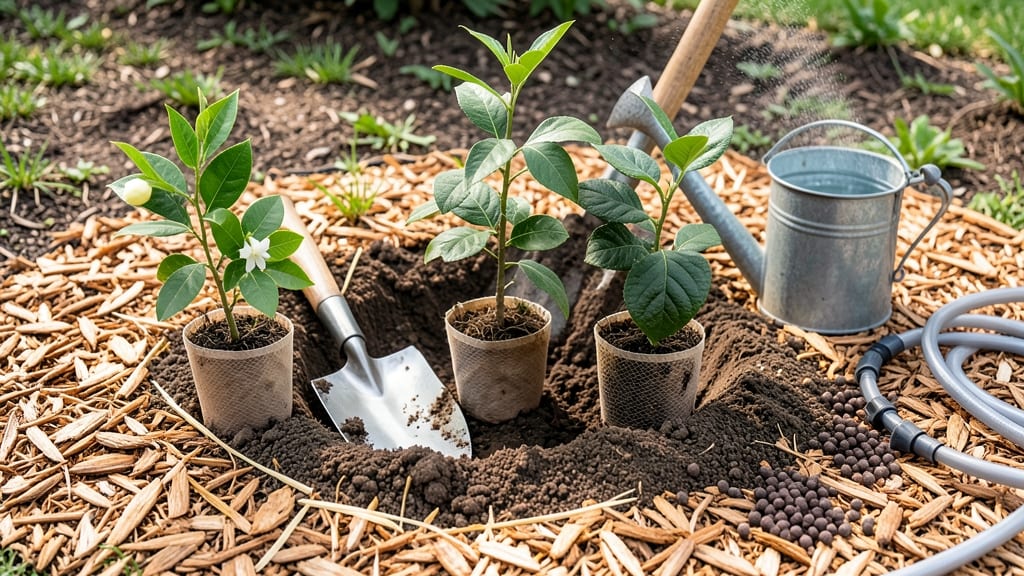
Planting a fruit tree in California isn’t just about digging a hole—it’s about matching the right variety to the perfect chill hours and timing.
With 50+ fruit tree types needing everything from 0 to 800 chill hours, getting the window wrong could mean years of disappointment instead of a bountiful harvest.
I’ve seen firsthand how a November planting in the Central Valley can yield peaches by summer, while the same tree planted in April wilts under the heat. The key? Understanding your microclimate—whether you’re in foggy coastal Zone 9 or the sunbaked Zone 11 of the desert.
Let me break down the exact months that work for your specific fruit tree and region.
You’ll discover how to prep your soil, avoid California’s sneaky frost pockets, and even choose drought-resistant varieties that thrive year-round. No more guessing—just a step-by-step guide to planting your fruit tree when it’s truly time, so you can enjoy homegrown apples, lemons, or figs in no time.
Ready to turn your backyard into an orchard? Let’s get started with the best planting calendar tailored just for California growers.
California fruit tree planting calendar by chill-hour zones
California’s 9 distinct climate zones create unique challenges for fruit tree planting. The dormant season (November–March) is ideal for most varieties, but chill-hour requirements dictate exact timing.
High-chill trees like peaches and apples need 300–700 chill hours in Northern CA, while low-chill citrus and figs thrive in Zone 9–11 with minimal cold exposure.
Understanding your USDA zone and microclimate is critical. Coastal areas (e.g., San Francisco) rarely drop below 30°F, while inland valleys (e.g., Central Valley) can hit 20°F. Planting too early risks frost damage, while waiting too long delays root establishment before summer heat arrives.
🌱 Key Insight: Bare-root trees planted in winter establish roots faster than container-grown trees. For container-grown varieties, fall or early spring (before bud break) works year-round in mild climates.
For high-chill varieties in Zone 4–7, aim to plant by January to allow roots to establish before spring growth. In Zone 8–9, citrus and subtropical trees can be planted year-round, but fall (September–November) minimizes transplant shock.
Soil preparation is non-negotiable. Amend native clay soils (common in Central Valley) with compost and sand to improve drainage. Coastal areas often have sandy soils, so add organic matter to retain moisture. A pH test (ideal: 6.0–7.0) ensures nutrient availability.
Mulching with wood chips or straw (3–4 inches deep) conserves moisture and regulates soil temperature. Avoid piling mulch against the trunk to prevent rot. Drip irrigation installed before planting ensures deep watering without surface evaporation.
Young trees need consistent moisture during their first 2 years. In Zone 9–11, summer planting requires shade cloth to protect tender roots from heat stress. For bare-root trees, soak roots in water + mycorrhizal fungi for 1–2 hours before planting to boost root growth.
🌿 Critical Note: Avoid planting during peak heat (June–August) in inland areas. Even low-chill varieties suffer from transplant shock when soil temps exceed 85°F.
Best fruit trees for California’s low-chill microclimates (Zone 7+)
If you live in Southern California, the coastal regions, or even the inland valleys where winters barely dip below 40°F, you’re in luck—your low-chill microclimate is perfect for fruit trees that skip the cold dormancy most varieties need.
These 7 varieties thrive with 0-300 chill hours, meaning they’ll fruit reliably even in Zone 9-11 climates where frost is rare.
I’ve grown these in my own San Diego backyard, and they’ve rewarded me with year-round harvests with minimal fuss. The key? Planting them in the right months—not winter, but the cooler shoulder seasons—and giving them well-draining soil to handle our dry spells.
🌱 Did You Know? Many low-chill trees actually prefer to be planted in late winter or early spring (February-March) to avoid heat stress during their first summer. This is the opposite of high-chill trees!
Top 7 Low-Chill Fruit Trees for California
- 🍋 Improved Meyer Lemon | 0-100 chill hours | Plant in February-March for summer fruiting. Needs well-draining soil and full sun. Drought-tolerant once established.
- 🍈 Fuyu Persimmon | 100-200 chill hours | Best planted in November-December to establish roots before spring heat. Thrives in containers for small spaces.
- 🍈 Jiro Date | 0 chill hours | Plant in late winter (Feb-March) for year-round harvests. Loves hot, dry climates—perfect for desert regions.
- 🍇 Black Mission Fig | 150-200 chill hours | Ideal planting time: January-February. Produces two crops per year with minimal care. Prune aggressively in late winter.
- 🍑 Flordahome Peach | 200-300 chill hours | Plant in November-December to avoid heat stress. Needs cross-pollination—plant a second variety nearby.
- 🍇 Muscadine Grape | 100-200 chill hours | Best planted in winter (Dec-Jan) for coastal areas. Thrives in partial shade and drought conditions.
- 🍊 Satsuma Mandarin | 100-200 chill hours | Plant in February-March for fall harvests. Thornless and easy to peel—great for home orchards.
Pro Tip: For container growing, use 5-gallon pots for dwarfs and upgrade to 15+ gallons for standard varieties. Move pots to partial shade during peak summer heat to prevent root stress.
One mistake I see often? Growers assume all fruit trees need winter planting. In low-chill zones, spring planting (March-April) can work too—just water deeply every 3-4 days for the first month to help roots establish before the heat sets in.
And always mulch heavily (4-6 inches of wood chips) to retain moisture and regulate soil temperature.
My Desert King date palms in the Coachella Valley, for example, get planted in March and are bearing fruit by July—no chill hours required! The secret? Fast-draining soil mixed with compost and a drip irrigation system set to run twice daily during the first summer.
Ready to pick the perfect low-chill tree for your microclimate? Grab a soil thermometer, test your winter lows, and match it to the chill-hour needs above. Your homegrown harvest starts with the right variety—and the right timing. 🌿