
How To
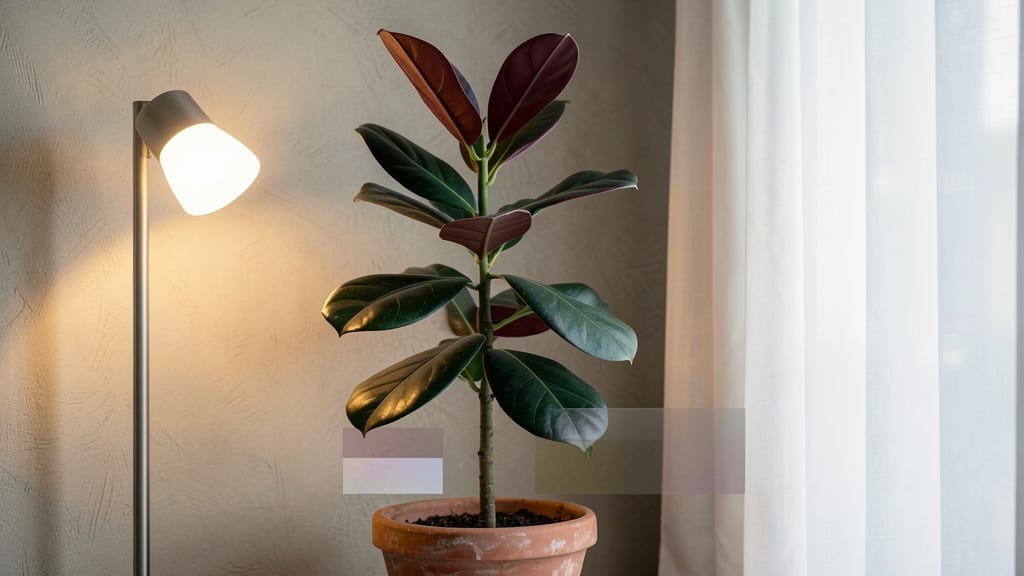
If your rubber plant needs how much light to thrive, you’re probably dealing with yellow leaves or stretched, leggy growth—signs that your plant isn’t getting the right conditions. Fixing this one issue could transform its health overnight.
Rubber plants thrive in bright, indirect sunlight, but too much direct sun or dim corners can send them into a slow decline. The key is finding that sweet spot where leaves stay glossy and growth stays strong.
I’ll show you exactly how to spot the signs of over- or under-lighting and adjust your care routine in just a few simple steps.
Whether you’re dealing with a south-facing window that’s too harsh or a dark corner that’s stunting growth, we’ll cover everything from ideal window placement to supplementing with grow lights. No more guesswork—just a healthier, happier rubber plant that keeps its signature deep green leaves year-round.
Let’s start by diagnosing your plant’s current light situation and making the adjustments that will have it looking lush in no time.
Perfect light conditions for rubber plants: bright indirect sunlight explained
Rubber plants (Ficus elastica) love bright indirect sunlight—this is their sweet spot for healthy growth. Too little light causes leggy growth and weak stems, while direct sun can scorch leaves. The key is mimicking their natural understory habitat where dappled light filters through tree canopies.
For optimal results, place your rubber plant 3-5 feet away from an east-facing or north-facing window. These windows provide gentle morning light without harsh afternoon rays. West-facing windows work too, but only if you use sheer curtains to diffuse the intensity.
Your rubber plant needs 2-6 hours of bright indirect light daily. In lower-light conditions, growth slows but the plant remains resilient. If leaves start stretching toward light sources, it’s a clear sign of light hunger—time to relocate or supplement with grow lights.
🌿 Pro Tip: Rotate your plant quarter-turns every 2-3 weeks to ensure even growth and prevent lopsided development. This mimics natural light shifts and keeps foliage lush on all sides.
| Light Condition | Ideal Placement | Leaf Response | Care Adjustment |
|---|---|---|---|
| Bright Indirect Light | East/West window, 3-5 ft away | Deep green, glossy leaves | Continue normal care |
| Low Light | North window or room corner | Pale, small leaves; leggy stems | Move closer to light or add grow light |
| Direct Sunlight | South window without filter | Brown/yellow patches; crispy edges | Move to indirect light; avoid afternoon sun |
| Artificial Light | Grow light 6-12 inches above plant | Healthy growth with 12-14 hours/day | Use full-spectrum LED; 12-hour cycle |
If your home lacks natural light, grow lights become essential. Look for full-spectrum LEDs that replicate sunlight’s red and blue wavelengths, critical for photosynthesis. Place the light 6-12 inches above the plant and provide 12-14 hours of light daily for optimal growth.
💡 Lighting Hack: For west-facing windows, use white sheer curtains to filter the intense afternoon sun. This prevents leaf burn while still allowing plenty of brightness. Test by holding your hand near the plant—if you can’t hold it comfortably for 30 seconds, the light is too harsh.
Rubber plants are highly adaptable, but they’ll always perform best with bright indirect light. Even in low-light conditions, they won’t die—just grow slower. The goal is to strike that balance where your plant stays vigorous, compact, and vibrant without stress.
🌳 Seasonal Note: During winter, when daylight is shorter, supplement with 1-2 hours of artificial light in the evening. This mimics longer days and prevents dormancy-related leaf drop. A simple clip-on LED grow light works wonders for maintaining consistent growth.
Perfect light conditions for rubber plants: bright indirect sunlight explained
Rubber plants (Ficus elastica) love bright indirect light—think of it as the perfect balance between sunlight and shade. Too little light causes leggy growth and pale leaves, while too much direct sun leads to brown leaf tips and crispy edges.
The goal is to mimic their natural habitat under the forest canopy, where they receive dappled sunlight.
For ideal results, place your rubber plant near an east-facing window or north-facing window, where morning sun is gentle. A west-facing window can work, but only if you use a sheer curtain to diffuse the harsh afternoon rays.
South-facing windows are risky—they often provide too much direct sunlight, especially in summer.
If your home lacks natural light, don’t worry. Rubber plants are low-light tolerant, meaning they can survive in rooms with moderate indirect light, like offices or living rooms away from windows. However, their growth will be slower, and leaves may lose their vibrant color over time.
| Light Condition | Ideal Placement | Leaf Color | Growth Pattern |
|---|---|---|---|
| Bright Indirect Light | East/West window, 3-5 ft away | Deep green, glossy | Compact, upright |
| Low Light | North window or room corner | Pale green, dull | Leggy, sparse |
| Direct Sunlight | South window, no curtain | Brown/yellow patches | Stunted, crispy edges |
To test your plant’s current light exposure, observe its leaves for 3-5 days. If they’re stretching toward the light, it needs more brightness. If they’re developing sunburn spots, move it farther away from the window.
Rotate your rubber plant quarter-turns every 2-3 weeks to ensure even growth and prevent it from leaning toward one light source.
For artificial lighting, a simple fluorescent bulb (like a 40-watt cool white bulb) placed 12-18 inches above the plant can work in a pinch. If you’re serious about indoor gardening, invest in a full-spectrum LED grow light to replicate natural sunlight more effectively.
Just remember: 12-14 hours of light per day is ideal, even if it’s artificial.
Pro tip: If your rubber plant starts showing signs of stress, act fast. A simple adjustment—like moving it closer to a window or adding a sheer curtain—can make all the difference in restoring its health and vibrancy. 🌿