
Flowers
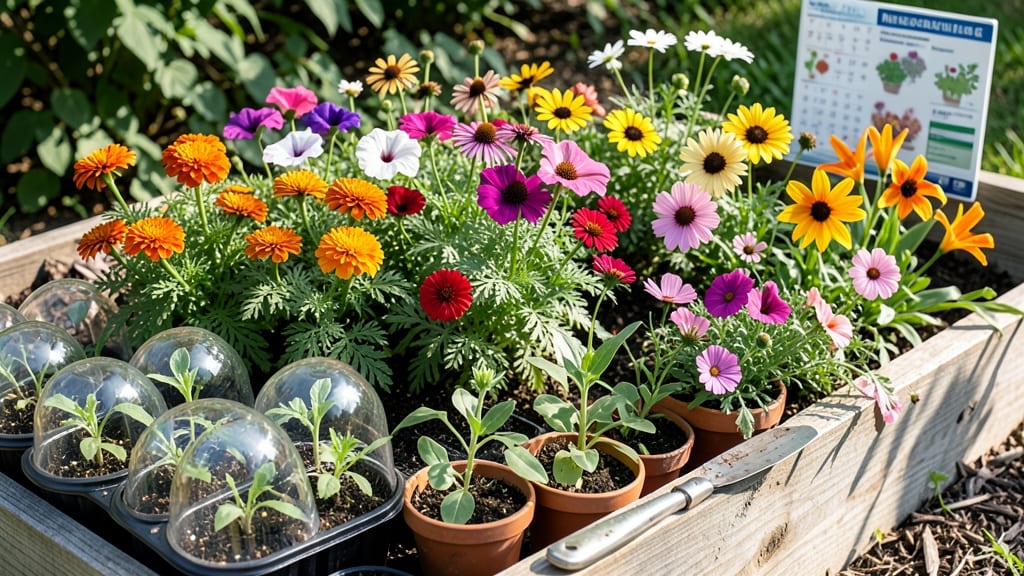
Planting your 🌸 flowers in Missouri at the right time—when it is safe to plant flowers in Missouri—can mean the difference between a vibrant garden and a sad pile of frost-nipped petals.
The average last frost date hovers around April 15, but that’s just a starting point—your exact window depends on whether you’re in St. Louis, Kansas City, or a rural patch of zone 5b-6b.
Too early, and a surprise frost will turn your tender seedlings into sad, icy snacks. Too late, and summer’s heat arrives before your blooms even think about sprouting.
The key isn’t just waiting for the calendar—it’s reading your soil’s temperature and watching for those consistent 60°F mornings that signal it’s finally safe.
I’ve spent years tracking Missouri’s unpredictable weather patterns, and what I’ve learned will help you avoid the most common mistakes. Whether you’re planting annuals for summer color or perennials that’ll return year after year, timing is everything.
In this guide, I’ll break down the exact week-by-week planting windows for your region, plus how to adjust for late frosts, early heatwaves, and even microclimates in your backyard. Let’s get those 🌸 flowers in the ground at the perfect moment—so you can enjoy them all season long.
Missouri heat zone map: exact week-by-week planting dates by region
Missouri’s diverse climate—from the humid Mississippi River valleys to the drier Ozark highlands—means planting dates vary by up to 3 weeks across the state.
The USDA divides Missouri into zones 5b through 7a, but local microclimates (like urban heat islands or windy riverbanks) can shift your ideal planting window even further.
For most gardeners, the last average frost date falls between mid-April and early May, but rural areas in the Ozarks often wait until late May.
To simplify, I’ve mapped out 6 key regions—St. Louis, Kansas City, Columbia, Springfield, the Ozarks, and the Bootheel—with their average last frost dates and ideal planting windows for both cool-season flowers (like pansies) and warm-season blooms (like zinnias).
Pro tip: Check the Missouri Botanical Garden’s frost calendar yearly for updates, as climate change is pushing frost dates later by 1-2 weeks per decade.
For annual flowers like marigolds or petunias, wait until soil temperatures hit 60°F+—a soil thermometer is your best tool here. In Zone 5b areas (northern Missouri), this often means delaying planting until mid-May to avoid black rot from cool, damp soil.
Meanwhile, perennials like coneflowers can handle cooler soils and can be planted 2-4 weeks earlier than annuals.
Missouri’s fall planting window runs from late August to early October, with the goal of getting seeds or transplants in 6-8 weeks before the first frost (typically October 15).
This gives cool-loving flowers like pansies and snapdragons time to establish roots before winter. In the Bootheel, you can even plant winter-blooming flowers like stock as early as September 15.
Don’t forget about bulbs! Spring-blooming bulbs (like tulips) should be planted in fall (October–November)
How to adjust planting dates for Missouri’s unpredictable weather patterns
Missouri’s spring weather can be as unpredictable as a toddler’s mood—one day it’s sunny and warm, the next, a hard frost sneaks in overnight. That’s why relying solely on average last frost dates (like April 15) can backfire.
Instead, I’ve learned to use a mix of soil temperature, frost clocks, and microclimate tricks to fine-tune my planting schedule.
For example, if you’re in zone 5b (like northern Missouri), a late frost in early May isn’t unheard of. But if you’re in zone 6b (like St. Louis), you might get lucky with an early April thaw. The key is to monitor local forecasts and adjust your timeline accordingly.
Here’s the game-changer: soil temperature matters more than air temperature. Most flowers need soil that’s at least 60°F before you plant. A soil thermometer (just $10 at any garden center) will save you from frost damage. If your soil is still chilly, even if the air feels warm, hold off.
🌱 Pro Tip: Use row covers or cold frames to extend your planting window by 2-3 weeks. These create a microclimate that traps heat, letting you plant heat-loving flowers like marigolds or zinnias earlier in the season.
⚠️ Warning: Late Frost Risks
Even if your neighbors are planting, don’t rush! Late frosts in Missouri can hit as late as May 10 in some areas. Check the National Weather Service or local Missouri Botanical Garden alerts for updates.
If frost is forecasted, cover tender plants with frost cloth or move potted flowers to a sheltered spot.
Another trick? Plant cold-hardy flowers like pansies or sweet alyssum 4-6 weeks before your last frost date. These tough little guys can handle light frosts and even bloom in cooler weather, giving you early color while you wait for the heat-lovers to catch up.
For fall planting, aim for 6-8 weeks before the first frost (usually late August to early October). This gives flowers like mums or aster enough time to establish roots before winter sets in. Use a frost clock (a simple tool that predicts frost dates) to time it perfectly.
Finally, pay attention to your microclimate. A south-facing slope warms up faster than a shady corner, while a windbreak (like a fence or hedge) can protect plants from late-season chills.
By tweaking your approach based on these factors, you’ll avoid the heartbreak of frost-killed blooms and enjoy a garden that thrives all season long. 🌿