
Plants
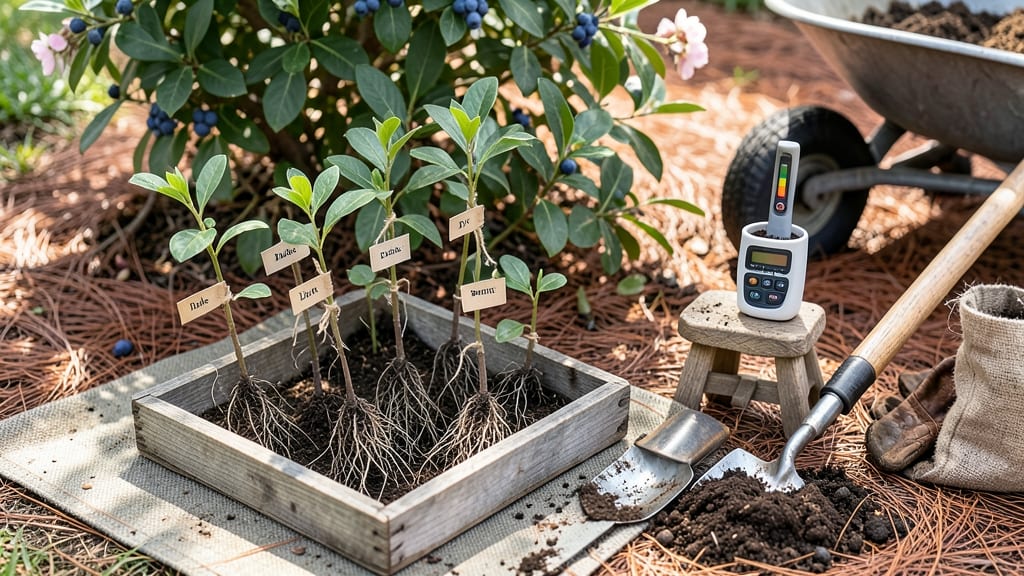
Planting blueberries in Maine isn’t just about picking a date—it’s about matching your variety’s chill-hour needs to avoid poor yields or no fruit at all. With Zone 5-6 conditions, timing your 🫐 bushes for late April through early June (after frost) or August-September (fall) makes all the difference.
Most gardeners overlook how critical soil prep is—blueberries demand acidic soil (pH 4.5-5.5) and consistent moisture. Skipping these steps can leave you with stunted plants or bitter berries, even if you planted at the "right" time.
In this guide, I’ll break down the best planting windows for Maine’s climate, including how to choose varieties that thrive in your microclimate—whether you’re coastal or inland. You’ll also learn how to adjust soil pH and avoid common pitfalls that trip up beginners.
Ready to grow juicy, homegrown blueberries? Let’s get your bushes in the ground the right way—so you can harvest July through August without the guesswork.
Best planting timeline for Maine blueberries by variety type
Maine’s Zone 5B/6A climate means blueberry planting windows are tight—getting your bushes in the ground at the wrong time can delay fruiting by 2-3 years.
For northern highbush varieties (like 'Bluecrop'), aim for late April to early June after the last frost, while lowbush types (like 'Lowbush') prefer fall planting in August-September.
Soil temperature is key: wait until the ground warms to 50°F (10°C) at a 4-inch depth. Use a soil thermometer to check—cold soil slows root establishment. Coastal Maine areas may have 2-3 weeks earlier windows than inland zones due to milder microclimates.
Fall planting (August-September) works best for bare-root plants because cooler temps reduce transplant shock. If you miss this window, hold off until spring—planting in October or later risks winter damage before roots establish.
Here’s how to align your planting with Maine’s frost patterns:
| Variety Type | Best Planting Window | Soil Temp Requirement | Frost Risk | Maine-Specific Notes |
|---|---|---|---|---|
| Northern Highbush (e.g., Bluecrop, Patriot) | Late April - Early June | 50°F (10°C) | High (last frost: mid-May) | Coastal areas: 1-2 weeks earlier |
| Southern Highbush (e.g., Premier, Top Hat) | Early May - Mid-June | 55°F (13°C) | Moderate (last frost: late April) | Best for warmer microclimates (e.g., Portland) |
| Lowbush (e.g., Wild Blueberry) | August - September (fall) | 45°F (7°C) | Low (first frost: mid-October) | Native to Maine; thrives in acidic bogs |
| Half-High (e.g., Jersey, Northblue) | Late April - Early June OR August | 50°F (10°C) | Moderate (last frost: mid-May) | Versatile for home gardens; compact size |
For container gardening, extend your planting window by 2-3 weeks—pots warm up faster than in-ground soil. Use black plastic pots (absorbs heat) and place containers in south-facing spots to accelerate root growth in spring.
Pro tip: If you’re planting in May, monitor your local NOAA frost forecast—a late frost can kill young shoots. Cover new plants with frost cloth if nighttime temps dip below 28°F (-2°C).
Mulching with pine needles or peat moss (2-3 inches deep) after planting helps retain moisture and mimics the acidic conditions blueberries love. This is especially critical in dry summers when Maine’s Zone 5B areas can experience heatwaves.
Remember: Spring-planted bushes may take 1-2 years to bear fruit, while fall-planted varieties often fruit sooner—sometimes in their first or second year. The key is giving roots time to establish before winter.
🌱
How to match blueberry varieties to Maine’s chill-hour zones
Maine’s Zone 5B/6A climate means not all blueberry varieties will thrive—some need 900+ chill hours, while others do well with just 300–500 hours. Choosing the wrong type can leave you with no fruit or stunted bushes.
For example, 'Bluecrop' (900+ hours) is perfect for inland areas, while 'Jersey' (300–500 hours) works better near the coast where winters are milder.
To pick the right variety, check your local chill-hour accumulation using NOAA’s climate data or a garden calculator. Most of Maine falls into the 500–900-hour range, so mid-season varieties like 'Patriot' (700 hours) or 'Earliblue' (500 hours) are ideal for broad compatibility.
If you’re unsure, test your microclimate by planting two varieties—one high-chill and one low-chill—to compare results.
Here’s how I match varieties to Maine’s zones: Start by identifying your last frost date (typically mid-May) and first frost (mid-October). Then, cross-reference with your variety’s chill needs. For instance, 'Duke' (400–500 hours) is great for coastal Zone 6A, while 'Chippewa' (900+ hours) thrives inland in Zone 5B.
| Variety | Chill Hours | Best Maine Zone | Notes |
|---|---|---|---|
| Bluecrop | 900+ | 5B (inland) | Classic, high-yielding |
| Patriot | 700–900 | 5B/6A | Disease-resistant |
| Jersey | 300–500 | 6A (coastal) | Early ripening |
| Duke | 400–500 | 6A (coastal) | Compact, great for containers |
If you’re planting in containers, prioritize varieties like 'Duke' or 'Top Hat' (both low-chill). These adapt well to urban settings and can be moved to warmer microclimates in winter if needed. For in-ground planting, 'Bluecrop' or 'Patriot' are my top picks—they handle Maine’s cold snaps better and produce consistently.
Pro tip: If you live in a transition zone (e.g., near Portland or Bangor), mix high- and low-chill varieties to extend your harvest season. For example, plant 'Jersey' (early) alongside 'Bluecrop' (late) to enjoy berries from July through August.
Just ensure they’re spaced at least 5 feet apart to avoid cross-pollination issues.
Finally, always buy bare-root or container-grown bushes from reputable nurseries like Maine Berry Farm or UMaine Extension. Avoid big-box stores—they often carry varieties that won’t survive Maine’s winters. With the right match, your bushes will reward you with years of fruit and minimal fuss.