
Plants
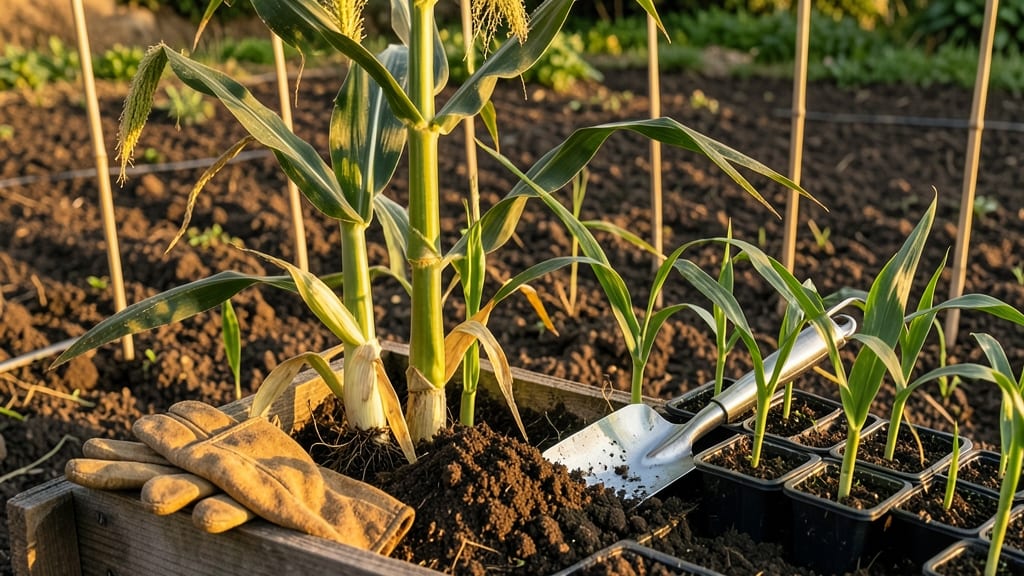
Planting corn in New Mexico isn’t just about timing—it’s about beating the heat and drought before they beat your harvest. With 90-day varieties as your deadline, you’ve got a narrow window to get seeds in the ground after the last frost, or risk stunted ears or total failure.
The Rio Grande Valley and high-desert regions play by different rules, so one-size-fits-all advice won’t cut it here.
Most gardeners in USDA Zones 6-8 should aim for late April to mid-May, but elevation changes everything. At 7,000 feet in Santa Fe, you might push planting to early June for short-season hybrids, while Albuquerque’s lower elevation lets you start sooner.
Ignore these deadlines, and you’ll either face frost damage or watch your corn bolt in the heat.
Here’s the game-changer: soil temperature matters more than calendar dates. Wait until the ground hits 60°F before planting—cold soil slows germination, and in New Mexico’s arid climate, every day counts.
I’ll show you how to adjust for your microclimate, pick the right drought-tolerant varieties, and water like a pro to keep your 🌽 thriving until harvest.
Skip the guesswork and learn the exact planting windows, soil prep tricks, and variety recommendations that work in New Mexico’s unpredictable climate. Your future harvest depends on it.
New Mexico heat Zone deadlines for corn planting by region
New Mexico’s diverse elevations create three distinct planting zones for corn: low desert (USDA 8), middle elevation (USDA 7), and high desert (USDA 6). Each zone has unique last frost dates and heat stress risks that dictate your planting window.
For example, Albuquerque (Zone 7) can start as early as late April, while Santa Fe (Zone 6) should wait until mid-May to avoid late spring frosts.
Your corn’s 90-day maturity window is non-negotiable—plant too late, and you’ll face fall frost risks before harvest. In Roswell (Zone 8), you might squeeze in a second planting by June 15 for late-season varieties, but northern regions like Taos should stick to a single April-May window to ensure success.
Here’s how to align your planting with New Mexico’s heat zone deadlines:
| Region | USDA Zone | Last Frost Date | Ideal Planting Window | Harvest Window | Key Risk |
|---|---|---|---|---|---|
| Albuquerque & Rio Grande Valley | 7-8 | Mid-April | Late April–May 15 | July–September | Heat stress after June |
| Santa Fe & Northern Mountains | 6 | Late April | Mid-May–June 1 | August–September | Late frost risk |
| Roswell & Southern Plains | 8 | Early April | Late March–May 10 | June–August | Drought stress |
| Taos & High Desert | 5-6 | Early May | Late May–June 10 | September | Short growing season |
For Albuquerque gardeners, aim to plant by May 1 to avoid 100°F+ temperatures during pollination. Use shade cloth if planting extends into June. In Santa Fe, prioritize short-season varieties like ‘Golden Bantam’ (75 days) to beat the October frost.
Soil temperature is your second critical deadline. Corn won’t germinate below 55°F, so wait until soil reaches 60°F+—typically 2-3 weeks after last frost. Use a soil thermometer to confirm. In low-elevation areas, this might mean delaying planting until early May.
Microclimates matter: South-facing slopes warm up faster, allowing earlier plantings, while north-facing gardens may need to wait 1-2 weeks longer. Test your spot by planting radishes (fast germinators) 2 weeks before your target corn date to gauge readiness.
Pro tip: Stagger plantings every 2 weeks for a continuous harvest. In Zone 8, this means March 15, April 1, and May 1 sowings. Just ensure your last planting finishes before August 15 to avoid frost.
Water management is your silent deadline. New Mexico’s drought-prone soils can dry out in days. Plan to irrigate 1-2 inches per week during germination and daily during tasseling. Use drip irrigation to conserve water and keep roots moist.
Don’t ignore altitude adjustments. For every 1,000 feet above 5,000 ft, subtract 1 day from your variety’s maturity time. A 90-day corn in Albuquerque (5,000 ft) might take 95 days in Taos (7,000 ft). Choose ‘Pueblo Blue’ (85 days) for high desert areas.
Miss these deadlines, and you’ll face stunted growth, poor pollination, or ear rot. But nail them, and you’ll enjoy sweet, homegrown corn from July through September. 🌽
How to adjust planting dates for drought-resistant corn varieties
New Mexico’s arid climate and unpredictable monsoons mean traditional corn planting windows often fail. The key to success? Drought-resistant varieties and flexible timing.
Varieties like 'Black Aztec' or 'Pueblo Blue' can stretch your planting window by 2-3 weeks, giving you a safety net when early spring rains (or lack thereof) throw off your plans.
For most of the state, late April to mid-May remains ideal, but higher elevations like Santa Fe (Zone 7) can push planting to early June. The trick is monitoring soil moisture—plant when the top 2 inches of soil stay 60°F+ for 5+ days.
Use a soil thermometer to avoid cold-soil delays that waste your short growing season.
Here’s how to extend your window: start with short-season hybrids (75-90 days) and sow in blocks every 10 days for staggered harvests. This ensures at least one batch matures before summer’s 100°F+ heat triggers bolting (when plants flower prematurely and produce poor ears).
Watering strategy is just as critical. Drip irrigation or soaker hoses deliver moisture directly to roots, reducing evaporation losses by 30%+ compared to overhead sprinklers. Aim for 1-2 inches of water per week, focusing on the root zone.
Mulch with straw or wood chips to lock in moisture and keep soil temps stable—this is non-negotiable in New Mexico’s high-desert conditions.
If your area faces late spring frosts (common in northern NM), opt for 'Golden Bantam', a sweet corn that tolerates cooler soils. For the Rio Grande Valley (Zone 8), you can even plant in March if you’re confident in frost-free conditions.
Always check your local Almanac frost dates—they’re your best early warning system.
Pro tip: Shade cloth over young plants during 100°F+ days can buy you 1-2 extra weeks of growth before bolting sets in. Pair this with mycorrhizal fungi in your soil—these beneficial microbes help roots absorb water more efficiently, giving your corn a fighting chance in dry spells.