
Plants
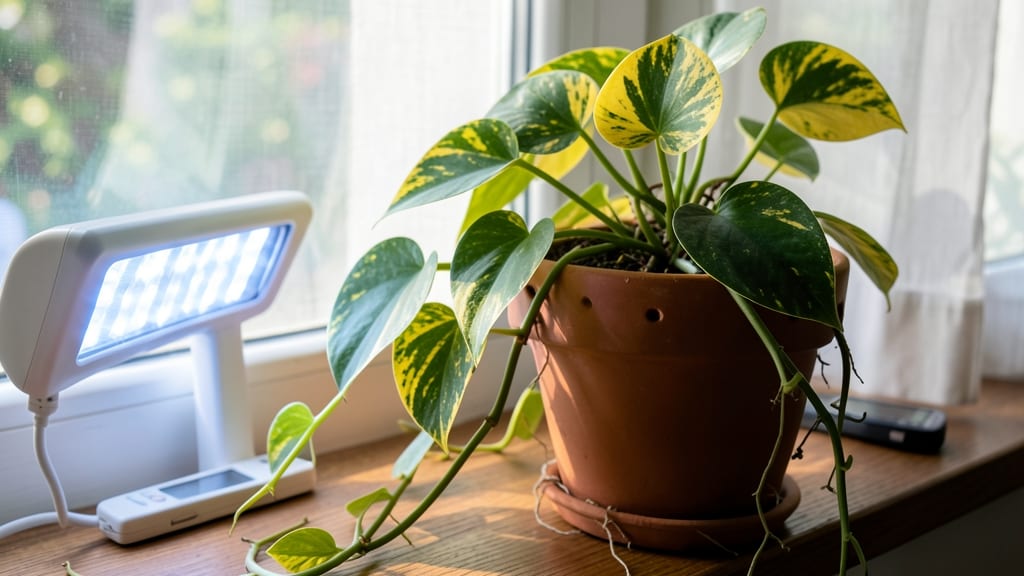
If you’re wondering how much light does a Pothos plant need, the answer is simpler than you think—this hardy vine thrives in low to bright indirect light, making it perfect for offices or dim corners where other plants fail.
Most people overcomplicate plant care, but the truth is simpler: Pothos adapts surprisingly well to different light levels. Too much direct sun? Watch for crispy brown edges. Too little light? Expect leggy stems and pale leaves. The key is finding that sweet spot where your plant stays vibrant and healthy.
In this guide, I’ll break down exactly how much light your Pothos needs—whether you’re dealing with fluorescent office lighting or a sunny windowsill. You’ll learn how to spot signs of stress and adjust your plant’s environment for maximum growth, no green thumb required.
Ready to turn your struggling Pothos into a thriving, trailing beauty? Let’s dive into the light conditions that will have it growing like crazy in no time.

Pothos light requirements: the ideal spectrum for healthy growth
Pothos plants—also called Devil's Ivy—are famous for thriving in low-light conditions, making them perfect for offices or dimly lit homes. However, they’re not one-size-fits-all: bright indirect light actually maximizes their stunning variegated leaves and growth speed.
Let’s break down the exact light spectrum your pothos craves and how to spot when it’s getting too much—or too little.
The ideal light range for pothos falls between 100–1,000 foot-candles of light intensity. This translates to placement near a north-facing window (gentle morning light) or under fluorescent bulbs in an office setting.
Even a south-facing window filtered through sheer curtains works, as long as direct sun is blocked. Think of it like Goldilocks—not too dark, not too harsh, but just right.
Here’s the science behind it: Pothos leaves contain chlorophyll and accessory pigments that absorb blue and red light wavelengths for photosynthesis. Too little light? The plant stretches toward any available rays, producing long, leggy vines with sparse leaves.
Too much direct sun? You’ll see brown crispy edges or sunburnt patches. The goal is to keep those heart-shaped leaves vibrant and compact.
Pro tip: If your pothos has solid green leaves (like the classic 'Golden Pothos'), it’s more tolerant of lower light levels than variegated varieties (e.g., 'Marble Queen' or 'Jade').
Those creamy white or yellow patterns need extra light to stay striking—otherwise, they’ll revert to all green. It’s like giving your plant a sun-kissed glow!
🌿
Pothos Light Requirements Summary
| Light Condition | Foot-Candles | Leaf Appearance | Growth Pattern |
|---|---|---|---|
| Low Light (<100) | North-facing window, office | Dull green, small leaves | Leggy, sparse vines |
| Ideal (100–1,000) | East/west window, fluorescent light | Bright green/variegated, medium size | Compact, bushy growth |
| Too Much (>2,000) | Direct south/west sun | Brown/yellow patches, crispy edges | Stunted, burnt tips |
Now that you know the ideal range, let’s talk about real-world placement. If your home only has south-facing windows, position your pothos 6+ feet away to diffuse the light.
For variegated varieties, consider rotating the pot quarter-turns weekly to ensure even light exposure—this prevents lopsided growth where one side stretches toward the window.
Another game-changer? Artificial grow lights. A simple 12–15 watt LED bulb (like a full-spectrum grow light) placed 12–18 inches above your plant mimics natural light perfectly.
I’ve seen pothos under these lights grow 3x faster than in dim office corners. It’s like giving your plant a mini greenhouse without the hassle!
Watch for these tell-tale signs of light stress: Yellow leaves usually mean too much water or poor drainage, but brown crispy edges are almost always a sunburn warning. On the flip side, if your pothos develops tiny, widely spaced leaves, it’s begging for more light.
Think of it as your plant’s way of sending an SOS.
🪴
Seasonal changes also affect your pothos’s light needs. During winter months, days are shorter, and indoor light fades. This is when supplemental lighting (even a bright desk lamp) can make all the difference.
Conversely, in summer, move your plant away from windows if you notice leaves curling or developing white spots—these are classic signs of heat stress combined with intense light.
Remember: Pothos are adaptable survivors, but they’ll always reward you with healthier growth when you meet them halfway. Start by placing yours near a bright, indirect light source, then adjust based on how the leaves respond.
Before you know it, you’ll have a thriving, trailing jungle that’s the envy of every plant lover!
How to adjust your home’s lighting for maximum Pothos success
Your Pothos plant might be getting the right amount of light, but your home’s lighting could still be holding it back. The good news? With a few simple adjustments, you can create the perfect lighting environment—even in tricky spots like bathrooms or north-facing rooms.
First, let’s talk about natural light optimization. If your Pothos is near a window, rotate it quarter-turns every few weeks to ensure even growth. South-facing windows can be too harsh, so use a sheer curtain to diffuse the light if you notice crispy leaf edges.
For spaces with limited natural light, like offices or basements, artificial lighting becomes key. Fluorescent bulbs (6000K color temperature) mimic natural light well, while LED grow lights (12-15 watts per square foot) can boost growth in dark corners.
Pro tip: If your Pothos starts stretching toward the light (etiolation), it’s begging for more brightness. Trim the leggy stems and place the plant in a sunnier spot immediately.
Even a small tweak—like swapping out a dim bulb for a bright white LED—can make a world of difference. Your Pothos will reward you with darker, shinier leaves and faster growth in no time.