
Plants
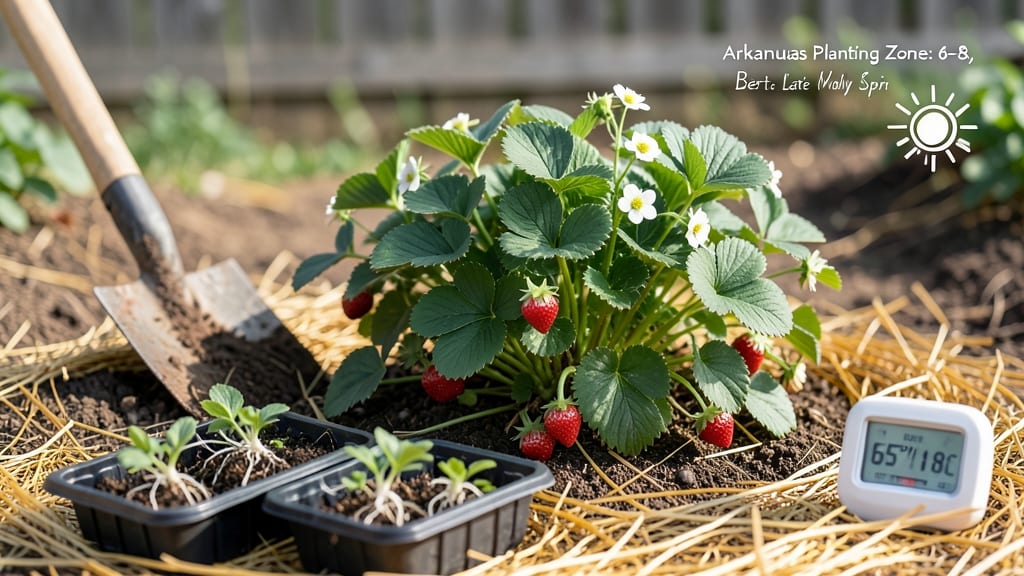
Planting strawberries in Arkansas at the wrong time means your 🍓 harvest could vanish before it even starts—or worse, never arrive at all. Unlike many plants, strawberries need precise timing tied to chill hours, and Arkansas’ 7a-8b zones demand special attention to avoid frost damage or weak growth.
Most gardeners in Arkansas plant strawberries in late winter to early spring (February-March) or fall (September-October), but not all varieties thrive under the same conditions. June-bearing types need 500+ chill hours, while day-neutral varieties are more flexible—knowing the difference is the key to a reliable crop.
I’ve grown strawberries in Arkansas for years, and I’ve learned the hard way that rushing planting or skipping soil prep can turn a promising patch into a disappointment.
In this guide, I’ll break down the exact windows for your zone, plus pro tips to protect your plants from Arkansas’ unpredictable frosts and extend your harvest season.
Whether you’re a first-time gardener or a seasoned pro, getting the timing right will save you from wasted effort—and ensure your strawberry patch bursts with flavor instead of frustration. Let’s get started.
Best planting times for Arkansas strawberries by chill-hour requirements
Arkansas’ mild winters and hot summers create unique challenges for strawberry growers. The chill-hour requirement—the number of hours below 45°F (7°C)—determines whether your strawberries will thrive or struggle.
Most Arkansas regions (USDA zones 7a-8b) accumulate 500-1,000 chill hours, meaning June-bearing varieties need careful timing, while day-neutral varieties offer more flexibility.
For June-bearing strawberries, plant in late winter to early spring (February-March) to ensure they receive enough chill hours before blooming. Day-neutral varieties, however, can be planted as late as September-October since they produce fruit continuously and don’t rely on chill hours as heavily.
Understanding your variety’s needs is the first step to avoiding bitter or underdeveloped fruit.
🌱 Pro Tip: Use a chill-hour calculator (like the one from the University of Arkansas Extension) to track your local accumulation. Most northern Arkansas areas (e.g., Fayetteville) hit 800+ chill hours, while southern regions (e.g., Little Rock) may only reach 500-600 hours—critical for selecting the right variety.
| Variety Type | Chill-Hour Needs | Best Planting Window | Arkansas Notes |
|---|---|---|---|
| June-Bearing | 500-1,000 hours | Feb 15 - Mar 15 | Best for northern AR; needs cold dormancy. |
| Day-Neutral | 0-300 hours | Sep 1 - Oct 15 | Ideal for southern AR; produces year-round. |
| Ever-bearing | 300-500 hours | Feb 1 - Mar 30 | Moderate chill needs; good for transitional zones. |
If you’re in northern Arkansas (USDA 7a-7b), prioritize June-bearing varieties like Chandler or Jewel, which need 800+ chill hours. In southern Arkansas (USDA 8a-8b), day-neutral varieties such as Seascape or Fort Laramie thrive with minimal chill hours and can even produce fruit in winter with protection.
Always check the back of seed packets for specific chill-hour ranges.
For fall planting, aim for 6-8 weeks before first frost (typically September-October in Arkansas). This gives roots time to establish before winter dormancy. Spring planting, however, should happen 4-6 weeks before last frost (usually February-March) to avoid early blooms that frost can damage.
🌡️ Warning: Planting bare-root strawberries in summer heat (June-August) stresses plants and reduces survival rates. If you must plant outside the ideal window, opt for potted plants or use shade cloth until roots establish. Arkansas’ summer heat can cause root rot if soil stays too wet.
To extend your harvest, consider staggered planting: plant half your June-bearing strawberries in February and the other half in March.
This spreads out fruit production and reduces the risk of a single massive harvest that spoils quickly. Day-neutral varieties naturally produce fruit over a longer period, making them ideal for continuous harvests.
Finally, soil temperature matters just as much as air temperature. Strawberries need soil to be 45-55°F (7-13°C) for optimal root growth. Use a soil thermometer to monitor conditions—planting too early in cold soil can stunt root development.
In Arkansas, this often means waiting until mid-February in northern regions or late February in southern areas.
💡 Key Takeaway: Match your strawberry variety to your chill-hour zone and plant within the 4-6 week window before last/first frost. For Arkansas gardeners, this means February-March for June-bearing and September-October for day-neutral varieties. With the right timing, you’ll enjoy sweet, juicy strawberries from April through June!
Best planting times for Arkansas strawberries by chill-hour requirements
Arkansas gardeners face a unique challenge with strawberries because the state’s USDA zones 7a-8b create microclimates where chill hours vary dramatically.
Most strawberry varieties need 500-1,000 chill hours (temperatures below 45°F) to produce fruit, and Arkansas’ northern regions (like Bentonville) often accumulate more than southern areas (like Little Rock).
June-bearing strawberries, the most popular type, require 500+ chill hours and should be planted in late winter to early spring (February-March) to ensure they get enough cold before blooming.
Day-neutral varieties, however, are more flexible and can handle 300-500 chill hours, making them ideal for fall planting (September-October) in Arkansas.
To check your local chill hours, use a home weather station or consult the Arkansas Climate Office. Most of northern Arkansas (zones 7a-7b) gets 800+ chill hours, while southern Arkansas (zone 8a) often falls short of 600.
This means gardeners in Fayetteville can plant June-bearing varieties earlier than those in El Dorado.
| Variety Type | Chill Hours Needed | Best Planting Window | Arkansas Zone Fit |
|---|---|---|---|
| June-Bearing | 500-1,000 | Feb-March (Spring) | 7a-7b (North) |
| Day-Neutral | 300-500 | Sept-Oct (Fall) | 7a-8a (Statewide) |
| Ever-bearing | 400-600 | Feb-March or Sept | 7a-8a (Flexible) |
Spring planting in Arkansas typically starts after the last frost date (mid-March), but I recommend waiting until soil temperatures reach 45°F to avoid root rot.
For fall plantings, aim to get strawberries in the ground 6-8 weeks before the first frost (mid-November)
One common mistake I see is planting bare-root strawberries in summer heat. Arkansas summers can exceed 95°F, and newly planted strawberries struggle to survive. If you miss the spring or fall windows, opt for potted plants instead—they handle heat better and can be planted year-round with proper shade. Pro tip: Use black plastic mulch in spring to warm the soil faster, or straw mulch in fall to insulate roots. Both tricks help extend your planting windows by 2-3 weeks in Arkansas’ unpredictable climate. 🌱