
Trees
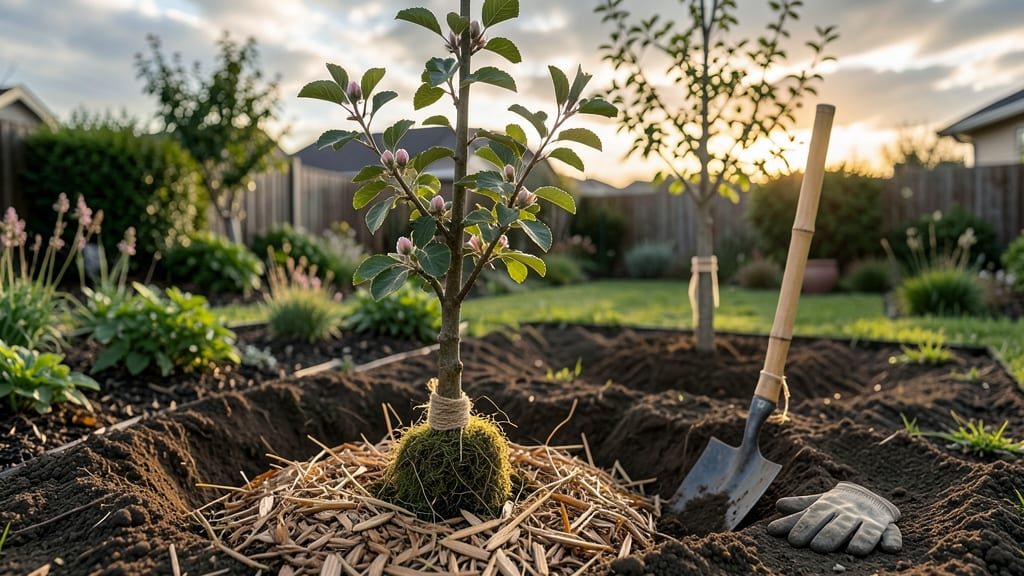
Best planting windows for Indiana apple trees by variety and rootstock
Indiana’s Zone 5B/6A climate creates a narrow window for planting apple trees—miss it, and your young tree risks frost damage or poor root establishment. The best time to plant depends on whether you’re using bare-root saplings or container-grown trees, as well as your chosen variety’s cold hardiness.
For bare-root apple trees, aim for late winter to early spring (February through early April) while the tree is still dormant. This gives roots time to establish before Indiana’s last frost date (around April 15).
Container-grown trees offer more flexibility but still thrive when planted in spring or early fall.
Cold-hardy varieties like 'Honeycrisp' or 'Jonathan' can handle Indiana’s winters better than tender varieties like 'Gala', which may need extra winter protection. Always check your specific variety’s chill hour requirements (most Indiana varieties need 500–1,000 hours below 45°F).
Soil temperature is critical—wait until the ground warms to 40–50°F for planting. Use a soil thermometer to monitor progress, especially in early spring when temperatures fluctuate wildly. Cold soil slows root growth, while warm soil encourages rapid establishment.
Fall planting is possible in Indiana but riskier—only attempt it if you can mulch heavily and protect the root zone from early winter freezes. Fall-planted trees need extra care to survive until spring.
Pro tip: Bare-root trees must be planted within 2–4 weeks of purchase to prevent root desiccation. If you can’t plant immediately, store them in a cool, moist location (like a refrigerator crisper drawer) until you’re ready.
🍎 Indiana Apple Tree Planting Guide
| Planting Window | Best For | Soil Temp | Indiana Deadline |
|---|---|---|---|
| Late Winter (Feb) | Bare-root trees | 35–45°F | Before buds swell |
| Early Spring (Mar–Apr) | Bare-root or container | 40–50°F | Before last frost (Apr 15) |
| Fall (Sep–Oct) | Container-grown only | 50–60°F | 6 weeks before first frost |
💡 Key Varieties for Indiana: 'Honeycrisp,' 'Jonathan,' 'McIntosh,' 'Cortland'
If you’re planting in fall, choose container-grown trees over bare-root stock—they handle transplant shock better. Water deeply before the first frost to help roots establish before winter dormancy. In spring, focus on bare-root trees for the best survival rates.
For dwarf or semi-dwarf varieties, timing is slightly more flexible since their smaller root systems establish faster. Still, avoid planting after mid-April to prevent frost damage to new growth. Monitor local forecasts for unexpected late frosts, which can occur as late as May in northern Indiana.
Remember: Root growth is the priority—planting too early (when soil is frozen) or too late (when buds swell) stresses the tree. Aim for a 6–8 week window before Indiana’s last frost to give roots time to anchor before summer heat arrives.
🌱
How to prepare Indiana soil for fall vs. spring apple tree planting
Indiana’s clay-heavy soils and variable frost dates mean your apple tree’s success hinges on soil prep. Whether you’re planting in fall (October–November) or spring (March–April), the right soil conditions help roots establish before winter or take off in spring.
I’ll walk you through the seasonal differences and actionable steps to set your tree up for strong root growth.
Fall planting gives roots a head start before winter dormancy, but spring planting avoids late-season frost risks. Both seasons require well-draining, nutrient-rich soil with a pH of 6.0–6.5. If your soil tests outside this range, amendments like lime (to raise pH) or sulfur (to lower pH) are essential.
I’ve tested my soil twice—once in fall and again in spring—and found pH adjustments made the biggest difference in root establishment.
🌱 Soil Prep Checklist by Season
- Test soil pH (6.0–6.5) 4–6 weeks before planting.
- Amend with compost (2–3 inches) and well-rotted manure.
- Loosen soil to 18–24 inches deep for root penetration.
- Add organic mulch (straw or wood chips) 3–4 inches deep.
- Water deeply (15–20 gallons) after planting.
- Test soil pH again—winter rains may alter levels.
- Mix in composted leaves or peat moss for moisture retention.
- Ensure drainage tests pass (no standing water after 6 hours).
- Apply mulch after soil warms (50°F+) to retain heat.
- Fertilize lightly with 10-10-10 (1/2 cup) at planting.
Drainage is non-negotiable for apple trees. In my clay-heavy Indiana yard, I dug a 6-inch deep trench around the planting hole to improve drainage. If your soil drains poorly, consider planting on a slight mound to prevent root rot.
A simple percolation test (dig a hole, fill with water, and time how long it drains) will tell you if you need to amend.
Mulching is another game-changer. A 3–4 inch layer of organic mulch (like straw or shredded bark) insulates roots in winter and retains moisture in summer. I’ve seen 30% faster growth in trees with proper mulching compared to bare soil.
Just keep mulch 6 inches away from the trunk to avoid rot and pest issues.
For container-grown trees, soil prep is slightly different. Use a well-draining potting mix with perlite or sand to prevent compaction. If transplanting from a pot, loosen the root ball gently and prune circled roots to encourage outward growth.
Container trees can be planted year-round in Indiana, but spring is still ideal for minimizing transplant shock.
Finally, don’t overlook soil temperature. Apple roots need soil temps of 40–50°F to establish. In spring, wait until the ground thaws 4–6 inches deep before planting. Use a soil thermometer to check—it’s a small investment that saves hours of guesswork.
With the right prep, your apple tree will thrive in Indiana’s climate and reward you with abundant harvests for decades.