
Trees
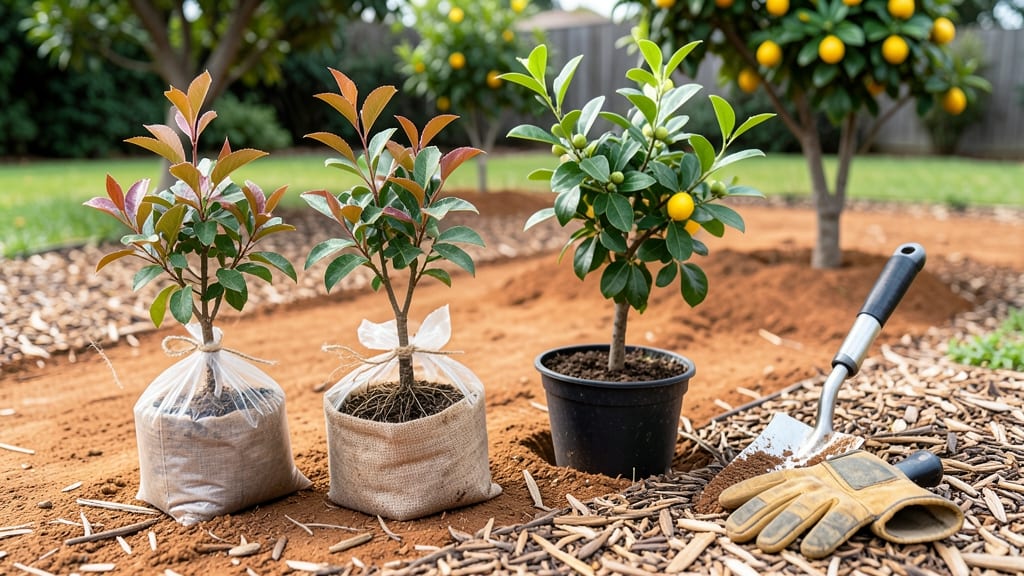
Planting fruit trees 🍎🍊🍇 in South Australia isn’t just about grabbing a sapling and digging a hole—it’s about reading your region’s frost calendar like a gardening pro.
The wrong timing can leave your trees vulnerable to late frosts in the Adelaide Hills or scorched by summer heat in the Riverland, and no one wants to watch their hard work wither before it even bears fruit.
If you’ve ever wondered why some local orchards thrive while others struggle, the answer often lies in when—not just how—they planted. South Australia’s 8a-9b zones bring unique challenges, from coastal warmth to inland cold snaps, and each variety—whether it’s a citrus tree or a peach—has its own ideal window.
Let’s cut through the guesswork and pinpoint the best months to plant for your specific area.
You’ll discover how to align your planting with soil temperatures, frost risks, and even rainfall patterns to give your trees the strongest start. Whether you’re in Adelaide’s urban gardens or the Barossa’s vineyard country, these insights will help you avoid common mistakes that lead to stunted growth or dead saplings.
Ready to turn your backyard into a fruitful haven? I’ll walk you through the exact steps, from choosing the right varieties for your microclimate to preparing the soil for success. Let’s get those roots in the ground at the perfect time—because patience now means harvests later.
South Australia’s frost zones: when to plant fruit trees by region
South Australia’s diverse climate zones mean your fruit tree planting window can vary dramatically from Adelaide’s coast to the Barossa Valley’s chilly nights. The key? Understanding your frost risk zone and matching it to your tree’s needs.
For example, apples and pears thrive in cooler regions like the Adelaide Hills, while citrus and figs prefer Adelaide’s milder coastal microclimate. Let’s break down the best planting times for each zone to ensure your trees survive—and thrive.
Most deciduous fruit trees (like apples, peaches, and cherries) should go into the ground during late winter to early spring (August–September). This timing aligns with soil warming and avoids frost damage to emerging roots.
Meanwhile, subtropical varieties (such as mangoes and lychees) can handle warmer soil and may even plant in early autumn (March–April)—but only in frost-free areas like Kangaroo Island or the Lower South East.
Here’s how to match your location to the perfect planting window, including frost risk alerts and soil temperature tips:
| Region | Frost Risk | Ideal Planting Window | Soil Temp for Planting | Best Varieties |
|---|---|---|---|---|
| Adelaide & Coastal | Low (occasional light frost) | March–April (autumn) or September–October (spring) | 15–20°C (59–68°F) | Citrus, Figs, Olives, Loquats |
| Adelaide Hills | High (frost common) | August–September (late winter) | 10–15°C (50–59°F) | Apples, Pears, Cherries, Plums |
| Barossa Valley | Moderate (cold nights) | September–October (spring) | 12–18°C (54–64°F) | Peaches, Nectarines, Apricots, Grapes |
| Kangaroo Island | Low (mild winters) | March–April (autumn) | 16–22°C (61–72°F) | Mangoes, Macadamias, Avocados |
| Riverland | Very Low (hot summers) | April–May (early autumn) | 18–25°C (64–77°F) | Stone Fruits, Citrus, Pomegranates |
If you’re planting in Adelaide’s coastal areas, aim for March–April to avoid late-winter frosts that can kill tender citrus roots. Meanwhile, gardeners
South Australia’s frost zones: when to plant fruit trees by region
South Australia’s diverse climate means planting windows vary dramatically—from the cooler Adelaide Hills to the warmer Riverland. The key is understanding your frost zone, which dictates when to plant deciduous vs. subtropical fruit trees.
For example, apples and pears thrive in cooler regions, while citrus and stone fruits need milder winters. Let’s break it down by region to avoid costly mistakes.
In the Adelaide Plains (Zone 8a), where frosts can linger until late August, aim to plant bare-root deciduous trees in September once soil temps hit 10°C (50°F). This timing ensures roots establish before winter dormancy.
Meanwhile, Kangaroo Island’s coastal microclimate (Zone 9a) allows citrus and figs to be planted year-round, though spring (September-October) is ideal for stone fruits like peaches and nectarines.
| Region | Best Planting Window | Frost Risk | Ideal Fruit Trees |
|---|---|---|---|
| Adelaide Hills (Zone 8a) | Late August–September | High (last frost: late August) | Apples, Pears, Cherries |
| Barossa Valley (Zone 8b) | September–October | Moderate (last frost: early September) | Peaches, Plums, Olives |
| Riverland (Zone 9a) | March–April (or year-round for citrus) | Low (rare frosts) | Citrus, Figs, Almonds |
| Kangaroo Island (Zone 9a) | September–October (spring) | Minimal (coastal protection) | Mangoes, Avocados, Lemons |
The Barossa Valley’s warmer nights (Zone 8b) push planting to September–October, perfect for stone fruits like plums and apricots. Here, olive trees can also be planted in spring or early autumn, avoiding the heat stress of summer.
For coastal areas like Glenelg, where frosts are rare, subtropical trees like mangoes can be planted almost anytime—but spring (September–November) is still best for root establishment.
If you’re in the Adelaide Hills, prioritize cold-hardy varieties like ‘Granny Smith’ apples or ‘Braeburn’ pears, which handle frost better than peaches. Plant in well-drained soil and use a windbreak to protect young trees from late-winter frosts.
In contrast, Riverland’s heat suits drought-tolerant citrus, but avoid planting in summer (December–February) when soil temps exceed 30°C (86°F).
Pro tip: Check your local frost risk maps (available from Pirsa’s climate tools) to pinpoint microclimate hotspots. For example, Mount Lofty Ranges can have 5°C (9°F) colder nights than nearby Adelaide suburbs—planting a peach tree there without protection is a recipe for failure.
Always amend heavy clay soils with gypsum or compost to improve drainage, especially in waterlogged winter.
Timing isn’t just about the calendar—it’s about soil temperature, rainfall patterns, and local frost forecasts. Use a soil thermometer to confirm 10°C (50°F) soil temps before planting bare-root trees, and water deeply after planting to reduce transplant shock.
With the right timing, your fruit trees will thrive for decades—not just survive their first winter. 🌱