
Companion Plants
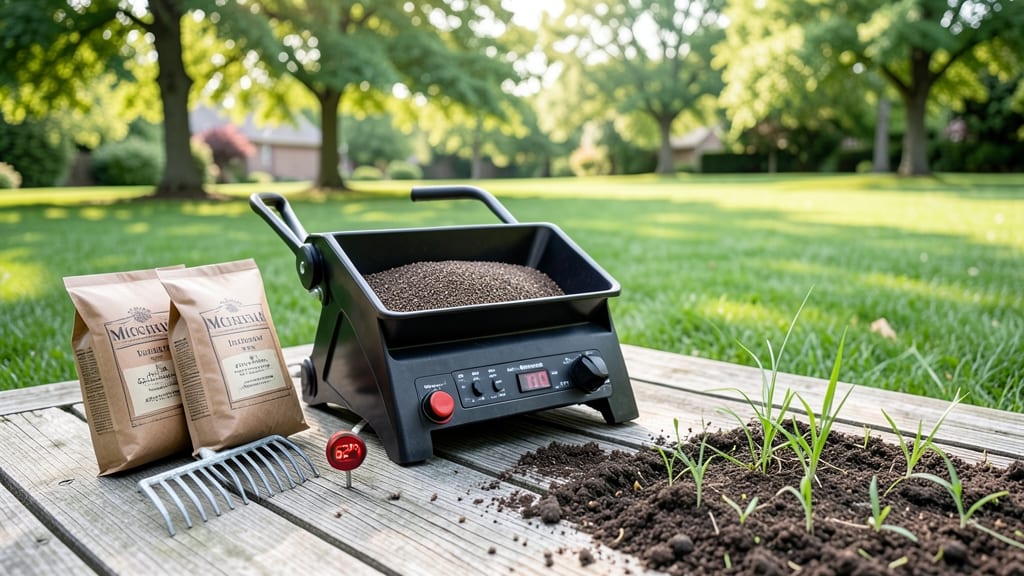
Planting grass seed in Michigan at the wrong time can mean wasted money and months of waiting—because frost and heat both sabotage your lawn before it even takes root.
Whether you're in the Upper Peninsula or Southern Michigan, getting the timing right means the difference between a lush 🌱 lawn and a patchy disappointment.
The key to success lies in Michigan's two best windows: early spring (after the last frost) and early fall (before the first frost). But here's the catch—your exact timing depends on where you live, with Northern Michigan needing to wait longer than Southern Michigan for safe planting conditions.
I'll break down the exact frost-free timeline for your region, plus pro tips for adjusting to Michigan's unpredictable weather. No more guessing—just a clear roadmap to planting grass seed when it'll actually grow.
Ready to transform your yard? Let's dive into the perfect planting schedule tailored to Michigan's climate zones, so you can enjoy that green carpet sooner than you think.
Michigan grass seed planting timeline by region (2024 frost dates)
Michigan’s diverse climate means your last frost date can vary by hundreds of miles. In the Upper Peninsula, you might still see frost in early June, while southern Michigan often hits 60°F soil temps by early April.
To maximize your lawn’s success, align your planting with your region’s frost-free window and cool-season grass preferences.
Cool-season grasses like Kentucky bluegrass and tall fescue thrive when planted in early spring (March–April) or early fall (September–October). These windows avoid summer heat stress and winter dormancy challenges.
Below, I’ve broken down the optimal planting periods for Michigan’s four key regions, including average last frost dates and soil temperature targets.
Pro Tip: Always check your local Almanac frost dates or use a soil thermometer (50–65°F is ideal for germination). In northern Michigan, wait until late April or May, while southern Michigan gardeners can start as early as March.
| Region | Average Last Frost | Optimal Planting Window | Soil Temp for Planting | Best Grass Types |
|---|---|---|---|---|
| Upper Peninsula (Marquette, Houghton) | May 10–20 | Late May–June (spring) or early September | 55–65°F | Tall fescue, perennial ryegrass |
| Northern Lower Peninsula (Traverse City, Grand Rapids) | April 20–May 5 | Mid-April–May (spring) or late August–September | 50–60°F | Kentucky bluegrass, fine fescue |
| Metro Detroit (Detroit, Ann Arbor) | April 10–20 | March 20–April 30 (spring) or September 1–20 | 50–65°F | Tall fescue, perennial ryegrass |
| Southern Michigan (Kalamazoo, Battle Creek) | April 1–10 | March 1–April 15 (spring) or August 20–September 15 | 50–60°F | Kentucky bluegrass, Bermuda grass (warm-season) |
🌡️ Note: Use a soil thermometer 3 inches deep to confirm readiness—surface temps can be misleading!
For spring planting, aim to finish by mid-May in most regions to avoid summer drought stress. If you miss this window, fall planting (September) is your next best bet, as cooler temps and consistent rainfall help seeds establish before winter.
In southern Michigan, where Bermuda grass is popular, you can also plant in late spring (May–June), but this grass struggles in northern climates due to its warm-season needs. Stick to cool-season varieties like tall fescue if you’re in Zone 5b or colder.
Always test your soil pH (ideal: 6.0–7.0) and amend with compost before planting. In sandy soils (common in UP), add peat moss to retain moisture, while clay-heavy soils (southern MI) benefit from gypsum to improve drainage.
🌱 Remember: Grass seed needs consistent moisture to germinate—water lightly twice daily for the first 2 weeks, keeping the soil evenly damp but not soggy.
How to adjust planting for Michigan’s unpredictable weather patterns
Michigan’s weather can shift from freezing nights to unseasonably warm days in a single week, making grass seed planting a delicate balancing act. The key is to extend your planting window without risking frost damage or summer stress.
I’ve planted grass in Michigan for over a decade, and here’s how I adapt to the chaos.
First, always check the soil temperature—not the air temperature. Grass seed needs soil that’s at least 50°F (10°C) for cool-season varieties like Kentucky bluegrass or tall fescue. Use a soil thermometer (they’re cheap!) to confirm readiness, especially in Northern Michigan, where cold pockets linger longer.
If a late frost hits within 2 weeks of planting, your new grass could suffer burn damage or fail to germinate. Use frost cloth (a lightweight row cover) for the first 2-3 weeks in early spring plantings, especially in zones 5b or colder.
Pro tip: Secure the cloth with bricks or stakes—a gust of wind can turn it into a sail and rip it apart.
For early spring plantings, aim for mid-April to early May in most of Michigan, but push to late May in the Upper Peninsula to avoid frost. In Southern Michigan, you can start as early as late March if the ground isn’t frozen.
The trick? Prepare your soil in February—till, amend with compost, and level the area so you’re ready to plant the moment conditions align.
If you miss spring, fall planting is your next best bet—ideally between mid-September and early October. Grass seed sown in fall has 6-8 weeks of warm soil to germinate before winter sets in.
Just stop planting by mid-October in the north or late October in the south to avoid first frost damage.
Microclimates matter too! A south-facing slope warms up faster in spring and stays warmer in fall, giving you a 2-3 week head start compared to shaded or low-lying areas.
If your yard has partial shade, opt for shade-tolerant grasses like fine fescue and plant in early fall for best results.
Finally, don’t stress if Michigan’s weather throws you a curveball. Even if you plant outside the ideal window, consistent watering and a little patience can still yield great results.
The most important rule? Plant when the soil is workable, not when the calendar says it’s "time." Your lawn will thank you.