
Plants
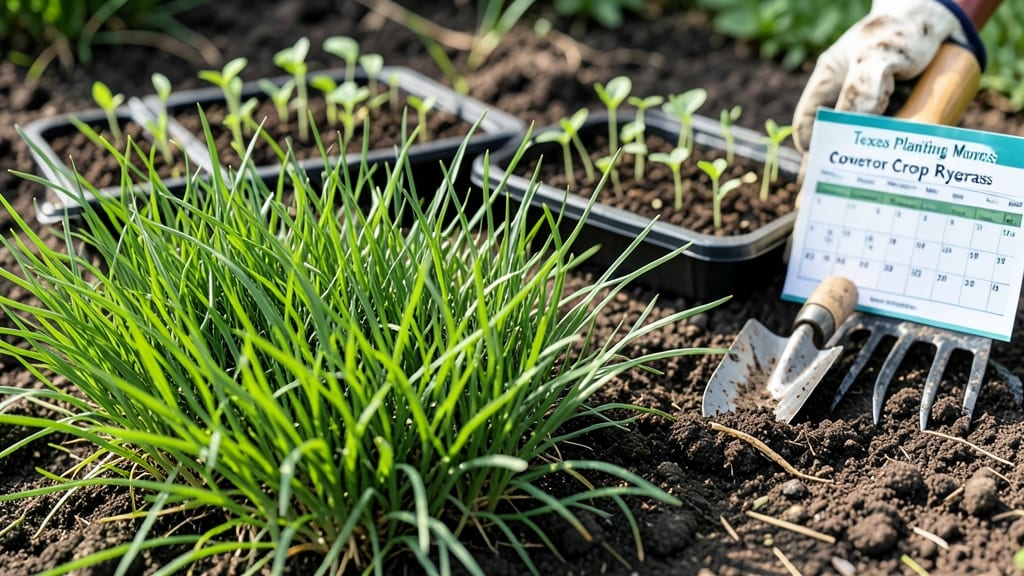
Planting annual ryegrass 🌾 in Texas isn’t just about dropping seeds—it’s about outsmarting the heat, frost, and everything in between to get the best cover crop results. The wrong timing can leave your field vulnerable to summer scorching or winter wipeouts, costing you precious soil protection and yield potential.
If you’ve ever wondered why some Texas farmers swear by fall plantings while others insist on spring, the answer lies in your specific USDA zone—whether you’re in 8a’s chilly North Texas or 10b’s milder South Texas.
I’ll break down the exact windows that work, so you can plant with confidence and avoid the common mistakes that derail even experienced growers.
What you’ll discover isn’t just when to plant—it’s how to prepare your soil, time your watering, and even adjust for late-season frosts that can sneak up on you.
Whether you’re a backyard gardener or a large-scale farmer, these Texas-tested strategies will help you maximize your cover crop’s potential before the next growing season.
Let’s cut through the guesswork and get your annual ryegrass off to the strongest start possible—because in Texas, the difference between a thriving cover and a failed one often comes down to those few critical weeks in the planting calendar.
Optimal planting dates for annual ryegrass in Texas regions (north vs. south)
Texas’s diverse climate zones mean your annual ryegrass planting window varies dramatically from North Texas to South Texas. In Zone 8a (North Texas), where frosts can hit as early as December 1, aim to plant by mid-October to establish roots before winter.
Meanwhile, in Zone 10a (South Texas), milder winters allow planting until late November—but heat stress becomes a risk if planted after mid-September.
For spring planting, North Texas gardeners should start seeds by February 1 to avoid late-season frosts, while South Texas can extend planting until early March. The key is aligning with soil temperatures of 55–65°F—too warm, and seeds won’t germinate; too cold, and growth stalls.
Here’s how microclimates affect your timing: East Texas (humid): Plant late August–early October to avoid fungal diseases from summer humidity. Central Texas (variable): Stick to September–October for fall or February–early March for spring. West Texas (arid): Plant early September–October to capitalize on fall rains.
| Region | USDA Zone | Fall Planting Window | Spring Planting Window | Key Risk |
|---|---|---|---|---|
| North Texas | 8a | Mid-August–Mid-October | Early February–Early March | Early frosts |
| Central Texas | 8b–9a | Late August–Late October | Mid-February–Mid-March | Heat stress |
| South Texas | 9b–10a | Late August–Late November | Late February–Early April | Summer die-off |
| West Texas | 7b–8a | Early September–Early October | Early February–Early March | Drought |
Use your local frost date as your anchor: Plant 4–6 weeks before the first frost for fall cover crops. For example, if your average first frost is December 1, seed by October 15.
Pro tip: Check the National Weather Service’s frost probability maps for your county—Texas A&M Extension also offers region-specific planting calendars.
For spring planting, the rule flips: Seed 4–6 weeks before your last frost. In North Texas (Zone 8a), that’s typically by February 15; in South Texas (Zone 10a), you can push it to March 1.
The goal is to establish a dense cover before summer heat sets in.
If you’re overseeding an existing lawn, time it with cooler mornings (after 90°F+ days subside). September 15–October 15 is ideal for most of Texas. Avoid planting when soil temps exceed 85°F—seeds won’t germinate, and you’ll waste money.
For agricultural fields, align planting with harvest schedules of your main crop. Annual ryegrass thrives as a winter cover crop after cotton, corn, or vegetables are harvested.
In East Texas, this often means planting after October 1; in West Texas, aim for September 1 to catch early rains.
Remember: Annual ryegrass is a cool-season grass, so it won’t survive summer heat. If you plant too late in fall, it may bolt (flower) early and lose its soil-protective benefits. The sweet spot is 60–90 days of growth before winter dormancy.
🌾
5 Critical factors that determine your planting success (beyond just dates)
Timing your annual ryegrass planting is just the first step—Texas’s extreme climate swings mean even the best dates can fail without the right conditions. The soil temperature is your #1 priority: seeds need 55–65°F soil to germinate reliably.
Use a soil thermometer to check—if it’s above 75°F, wait or risk poor establishment.
Next, moisture consistency makes or breaks your cover crop. Annual ryegrass thrives with 1–1.5 inches of water weekly during establishment, but Texas droughts can turn your field into dust. Irrigate deeply 2–3 times per week until seedlings emerge, then taper to weekly maintenance once established.
Don’t overlook seed depth—planting too shallow (¼ inch) exposes seeds to drying winds, while burying them too deep (½ inch+) delays germination. Aim for ¼–½ inch depth, and consider a light mulch (straw or compost) to retain moisture in our hot, dry spells.
Texas’s weed pressure is no joke—annual ryegrass grows fast, but weeds like crabgrass or pigweed can steal your plot if you’re not proactive. Plant clover or vetch alongside your ryegrass to smother weeds naturally and boost soil fertility. This companion planting trick is a game-changer for organic growers.
Finally, late-season frost protection is where many Texas gardeners trip up. Even if you planted on time, a 20°F freeze can wipe out your cover crop overnight.
Apply a light nitrogen fertilizer 4–6 weeks before the first frost to toughen up your plants, and consider a row cover in North Texas zones (7a–8a) where frosts hit hardest.
Master these 5 factors, and you’ll turn Texas’s challenges into advantages—your annual ryegrass will outperform neighbors who only focus on planting dates. The difference? A thriving cover crop that protects your soil year-round, not a failed experiment. 🌱