
Plants
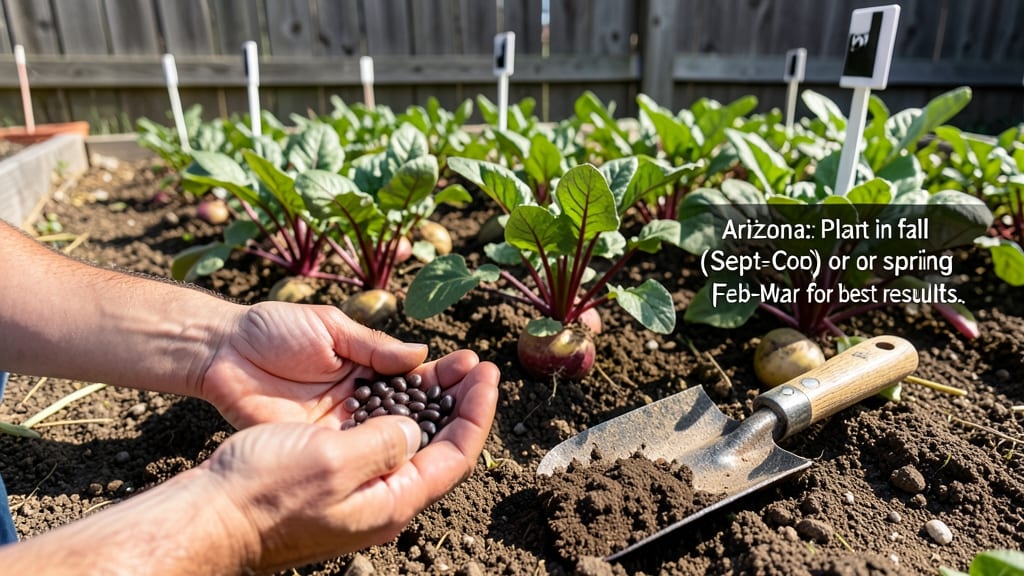
Planting beets in Arizona’s brutal summers can feel like playing a high-stakes game of chance—but the right timing turns that gamble into a guaranteed harvest. Skip the summer months, and you’ll end up with bitter, stringy 🍠 instead of the tender, sweet roots you crave.
The secret? Focus on cool-season planting between September and November, when temperatures drop and your beets can finally thrive without bolting.
I’ve grown beets in Arizona’s 9b zone for years, and the difference between a fast, successful crop and a disappointing one comes down to one thing: planting at the right time.
Fall is your best bet, but with a few extra tricks—like choosing heat-tolerant varieties and keeping soil moist—you can even squeeze in a spring planting window for a bonus harvest.
Why does timing matter so much? Beets hate heat, and Arizona’s summers will send them bolting (flowering early) faster than you can say “woody roots.”
But when you plant them in cooler months, you’ll see those roots swell up in just 45–70 days, giving you a harvest window from December through July. Let me show you exactly how to make it happen without the guesswork.
Ready to grow beets that actually taste good? I’ll walk you through the perfect schedule, from soil prep to harvest, so you can enjoy fresh, homegrown 🍠 all season long—no matter how hot it gets outside.
Best planting windows for beets in Arizona’s climate zones
Arizona’s three distinct climate zones—Low Desert (Phoenix), High Desert (Flagstaff), and transitional areas—each demand different beet planting strategies. The key is avoiding summer heat stress (above 85°F) and extreme temperature swings that cause bolting. Let’s break down the best months for each zone to maximize your harvest.
In the Low Desert (USDA Zone 10a-11), where summer temps can hit 110°F, beets thrive only in cool-season windows. The ideal planting window spans from late August through November, with a secondary spring window in February-March before heat ramps up.
Higher elevations (Zone 7b-9a) like Flagstaff can plant a month earlier—starting in July-August for fall harvests.
Timing matters because beets bolt (go to seed) when stressed by heat or drought. Planting in September-October ensures roots mature before December’s occasional frost (especially in the High Desert). For container gardens, adjust 2-3 weeks earlier—pots heat up faster and dry out quicker.
Here’s the zone-specific breakdown you need to plan your beet schedule:
| Zone | Primary Planting Window | Secondary Window | Harvest Window | Key Risk |
|---|---|---|---|---|
| Low Desert (Phoenix) | Late Aug–Nov | Feb–Mar | Oct–Apr | Summer heat (May–Sep) |
| Transitional (Tucson) | Mid-Aug–Oct | Jan–Feb | Sep–May | Late frost (Dec) |
| High Desert (Flagstaff) | Jul–Aug | Mar–Apr | Aug–Oct & May–Jun | Early frost (Nov) |
For Low Desert gardeners, focus on fall planting (Sept–Oct)—this gives beets 60–70 days to mature before winter slows growth. In Flagstaff’s cooler climate, you can squeeze in two harvests: one from July planting and another from March.
Always check your local frost dates (use the AZ Meteorology Office for updates).
Pro tip: Use shade cloth (30–50%) if planting in late spring (April) to buy time before summer heat hits. This extends your window by 2–3 weeks without bolting. Pair this with drip irrigation to maintain consistent soil moisture—beets hate dry spells!
If you’re in Phoenix or Tucson, mark your calendar for September 15th—this is the sweet spot for planting ‘Detroit Dark Red’ or ‘Golden’ varieties. By November 1st, your beets should be ready for harvest before winter chill sets in.
For High Desert areas, aim for July 1st to avoid frost damage in late fall.
Remember: Soil temperature is just as critical as air temperature. Beets grow best in 55–75°F soil. Use a soil thermometer to confirm—if it’s above 80°F, wait 2–3 weeks or opt for shade.
In Arizona’s alkaline soils, amend with compost to improve drainage and reduce bolting risks.
For container growers, start seeds indoors in late August and transplant by September 15th. Containers dry out faster, so water daily and use 5-gallon pots minimum for full-sized beets. Place pots in partial shade during afternoon heat (1–4 PM) to prevent stress.
Finally
How to avoid bolting: Arizona-specific tips for beet success
Arizona’s intense summer heat forces beets to bolt—shooting up flower stalks instead of growing sweet roots. This happens when daytime temperatures exceed 80°F (27°C) for too long.
Without intervention, your beets will taste bitter and woody before you even harvest. The key? Strategic shade, soil moisture, and variety selection tailored to Arizona’s climate.
Bolting isn’t just about heat—dry soil and nutrient stress also trigger it. In my Low Desert garden (Phoenix area), I’ve learned that consistent moisture and light shade during peak afternoons can delay bolting by 2-3 weeks.
For High Desert gardeners (Flagstaff), the risk is lower, but early spring planting still demands vigilance against rapid temperature swings.
🚨 CRITICAL INSIGHT: Beets planted in late August or early September often bolt by October if left unprotected. My solution? Use floating row covers or lightweight shade cloth (30-50%) during 12 PM–4 PM when temps soar. This mimics the cooler conditions beets prefer while still allowing sunlight for growth.
⚠️ Arizona Bolting Warning Signs
- 🌡️ Soil temp exceeds 75°F (24°C) for 3+ days
- 🌱 Leaves yellow at the base while remaining green at tips
- 🌱 Stem elongates rapidly (bolting)
- 💧 Water stress (soil cracks or wilts between waterings)
ACT NOW: If you see these signs, harvest immediately or provide daily shade + deep watering.
Not all beet varieties bolt at the same rate. ‘Detroit Dark Red’ and ‘Golden’ are more heat-tolerant than ‘Chioggia’, which bolts faster in Arizona’s heat. For fastest harvests, I plant ‘Babybeat’ (ready in 45 days) in fall and ‘Cylindra’ (long, smooth roots) in winter.
Succession planting every 2 weeks from September–March ensures a continuous harvest without bolting risks.
Soil temperature is just as critical as air temperature. Use a soil thermometer—beets thrive when soil stays between 55–75°F (13–24°C). In Arizona, this means fall planting (September–October) is ideal, while spring planting (February–March) requires mulch to slow soil warming. My go-to mulch? Straw or wood chips (2–3 inches thick) to retain moisture and cool roots.
For container growers, bolting is even riskier due to limited soil volume. Use 5-gallon pots with well-draining potting mix and water daily in summer. Place containers in partial shade (e.g., under a 30% shade cloth) during June–August.
I’ve had success with ‘Little Ball’ beets in containers—they mature in 50 days and bolt less readily.
Bolting isn’t always preventable, but with these Arizona-specific tricks, you can delay it by 30–45 days and still enjoy sweet, tender beets. Start with shade cloth, consistent watering, and heat-tolerant varieties—your harvest will thank you! 🌱