
Plants
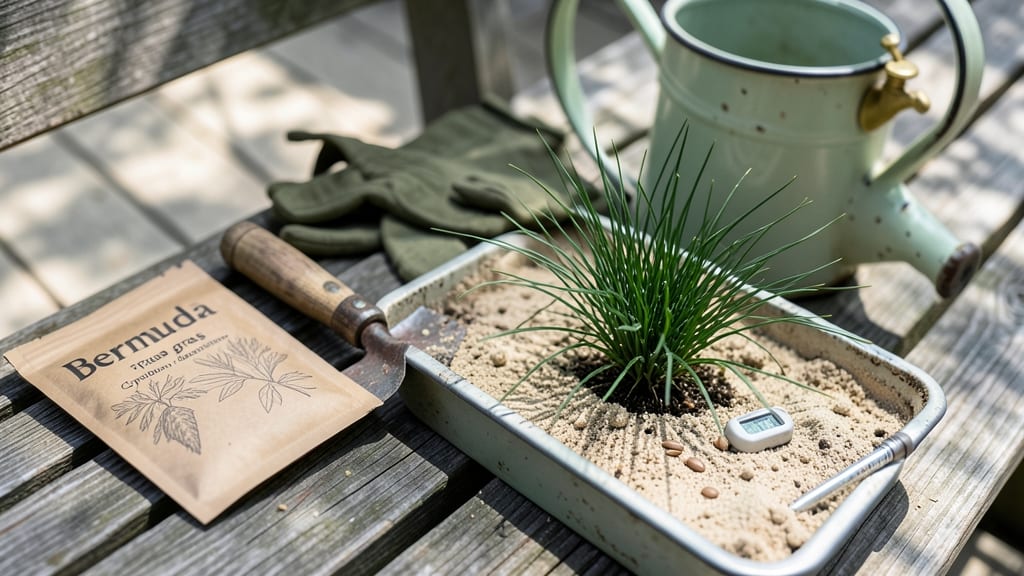
Planting Bermuda seed in North Texas at the wrong time means thin, patchy grass that struggles through summer heat—so timing is everything. The 6-week window from mid-April to late May gives your 🌱 Bermuda Grass the best chance to establish strong roots before the real heat arrives.
Why does this matter? Because Bermuda thrives in hot weather, but it needs warm soil—at least 65°F—to germinate properly. Plant too early, and cold snaps can kill young seedlings. Too late, and summer drought stress sets in before the grass takes hold.
North Texas’ 8a climate adds another layer—Hill Country areas may need to wait until late April, while DFW can start earlier. I’ll break down exactly how to read your soil’s temperature cues and adjust for your microclimate.
Once you nail the timing, the rest is straightforward: watering twice daily for 2 weeks, fertilizing at 4 weeks, and watching your lawn transform into a lush, drought-resistant carpet by summer. Let’s get your Bermuda Grass off to the fastest start possible.
Optimal Bermuda seed planting window in North Texas (with temperature guidelines)
Bermuda grass thrives in North Texas' hot, dry summers, but planting too early risks frost damage while waiting too late means struggling with summer heat stress. The perfect window is between mid-April and late May, when soil temperatures consistently stay above 75°F—the magic threshold for germination.
Why this timing? Bermuda seed needs warm soil to sprout quickly, and planting in late spring ensures your lawn establishes before summer's brutal 100°F+ heat arrives. In USDA Zone 8a, this window aligns with the last frost date (March 15) plus a 4-week buffer for stable warmth.
Use a soil thermometer to confirm readiness—plant only when readings hit 75°F+ for 5+ days. Early April plantings risk cold snaps, while June starts may see heat stress before roots establish.
🌱
| Planting Stage | Ideal Timeframe | Soil Temp Requirement | North Texas Microclimate Notes |
|---|---|---|---|
| Preparation | Late March - Early April | 60°F+ (for soil prep) | Dallas-Fort Worth warms faster than Hill Country |
| Planting Window | Mid-April to Late May | 75°F+ (minimum) | Hill Country: Wait until May 1st; DFW: April 15th safe |
| Germination | 7-14 days after planting | 75°F+ maintained | Urban areas may dry faster; water 2x/day |
| Establishment | 60-90 days total | 80°F+ ideal | Rural areas establish faster with natural rainfall |
If you're in West Texas (e.g., Lubbock), push planting to late April—the soil heats up faster, but early plantings risk 30°F+ nighttime drops. For East Texas (e.g., Tyler), early April is safer due to slower warming.
Pro tip: Check the National Weather Service for 7-day highs—aim for consistent 80°F+ days before planting. This ensures your Bermuda seed doesn’t sit dormant in cool, wet soil, which invites fungal diseases like Pythium.
For hybrid Bermuda varieties (like Tifway 419 or Celebration), plant on the earlier side (mid-April) since they germinate faster. Common Bermuda can wait until late April without issues.
🌡️
Remember: The first 2 weeks after planting are critical. Bermuda seed needs moisture consistency—water lightly daily (not deeply) until sprouts appear. Once germination starts (7-14 days), switch to deep watering 2x/day for 2 more weeks to encourage root growth.
5 Critical factors that determine your exact planting date in North Texas
North Texas isn’t one-size-fits-all for Bermuda seed planting. Your exact planting date depends on 5 key factors—each can shift your window by weeks. Ignore them, and you risk slow germination or seed washout from spring rains. Let’s break down how to adjust your timeline based on local conditions.
First, microclimates matter more than your ZIP code. Urban areas like Dallas-Fort Worth often hit 75°F soil temps 1–2 weeks earlier than rural Hill Country spots. Use a soil thermometer ($15 at garden centers) to confirm readiness—don’t guess!
Planting too early in cooler microclimates (like elevated areas) can leave seed vulnerable to late frost or fungal rot.
Next, check the 10-day rainfall forecast. Bermuda seed needs consistent moisture to germinate, but too much rain (1+ inch in 24 hours) can bury seeds or cause erosion.
Aim to plant when forecasts show dry spells for the first 7–10 days. Tools like the National Weather Service’s North Texas alerts or Weather Underground can save you headaches.
Your seed variety also dictates timing. Hybrid Bermuda grasses like Tifway 419 or Tufway germinate in 7–10 days at ideal temps, while common Bermuda can take 14–21 days. If you’re using a slower variety, plant 2 weeks earlier to account for delays.
Always check the seed bag for germination rates—some brands advertise 90%+ success, while others barely crack 70%.
Finally, watch out for 3 planting mistakes that derail North Texas lawns:
- Planting before last frost (March 15 average, but late frosts happen).
- Skipping soil prep (till, level, and add compost—Bermuda hates compacted soil).
- Overwatering after germination (2x/day for 2 weeks, then taper to morning-only). Pro tip: Mark your calendar for June 1—that’s your last chance to plant before summer heat stalls growth.
Adjust these factors, and you’ll nail your planting date. Miss them, and you’ll be chasing a thin, patchy lawn all summer. Start with a soil test ($20 at local co-ops) to confirm pH (aim for 6.0–7.0)—Bermuda struggles in acidic soil. 🌱