
Plants
Planting blackberries in Arkansas at the wrong time can mean the difference between a bountiful harvest of juicy 🫐 and struggling vines that barely fruit.
The key isn't just about the calendar—it's about matching your variety to Arkansas's Zone 7a-8b chill hours and planting when soil temperatures hit that sweet 50–60°F window.
Most Arkansas gardeners swear by late winter to early spring (February–March) for bare-root transplants, but fall (September–October) can work too—if you pick the right variety and prep the soil correctly.
I've seen firsthand how a single week's delay can lead to weaker root systems or even winter damage, especially in colder microclimates like the Ozarks.
In this guide, I’ll break down the exact planting windows for Arkansas’s top varieties, from 'Apache' (a primocane favorite) to 'Natchez' (a floricane classic), plus how to adjust for your specific region—whether you're in the Delta’s humidity or the Ozarks’ cooler nights.
You’ll also discover why container planting might be your best bet if your soil drains poorly, and how to spot Arkansas-specific pests like blackberry leaf curl before they ruin your crop. Let’s get those canes in the ground the right way.
Best planting windows for Arkansas blackberries by chill-hour requirements
Arkansas’s Zone 7a-8a climate creates ideal conditions for blackberries, but chill-hour requirements dictate the perfect planting window. Most Arkansas varieties need 600–1,200 chill hours (below 45°F) to fruit well. Planting at the wrong time can delay fruiting or stress young canes, so timing matters more than you might think.
For floricane-fruiting varieties like 'Natchez' or 'Ouachita', aim for late winter to early spring (February–March) when soil temps hit 50–60°F. These varieties produce fruit on second-year canes, so early planting gives them time to establish roots before summer heat arrives.
Meanwhile, primocane-fruiting types like 'Apache' or 'Arapaho' can handle fall planting (September–October), fruiting on first-year canes. This extends your harvest window but requires protecting young plants from early frosts in northern Arkansas.
Here’s how Arkansas’s microclimates affect timing: Northern regions (e.g., Bentonville) have earlier last frosts (March 15), while southern areas (e.g., Little Rock) can plant up to March 30. Always check your local USDA frost date map before breaking ground.
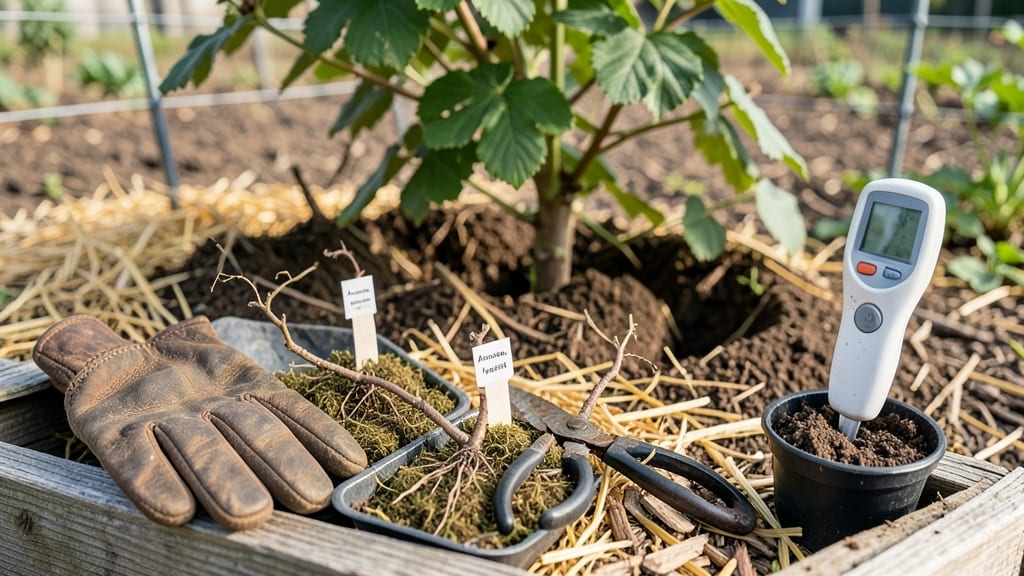
Soil temperature is just as critical as air temperature. Use a soil thermometer to confirm 50°F+ before planting—cold soil delays root growth. In Arkansas’s clay-heavy soils (common in the Delta), amend with compost to improve drainage and warm up faster.
Pro tip: Bare-root transplants (available in early spring) establish faster than potted plants, but container-grown blackberries can be planted year-round in Arkansas’s mild winters. If you choose fall planting, select thornless varieties like 'Navajo' to reduce harvest hassles.
Now, let’s break down the best planting windows by variety type and chill-hour needs in Arkansas:
Spring planting (March–April) is the safest bet for Arkansas gardeners, especially in northern zones where late frosts linger. Plant bare-root canes as soon as soil is workable, then mulch heavily to retain moisture and regulate soil temps.
For fall planting, choose September in southern Arkansas or October in cooler northern areas.
One common mistake? Planting too early when soils are still cold. If you’re itching to start in January or February, opt for container planting and move pots to a sheltered spot until soil warms. This buys you time while avoiding transplant shock from frozen ground.
Remember: Arkansas’s humidity and summer heat can stress young blackberries, so prioritize well-draining soil and morning watering to prevent fungal diseases like anthracnose. With the right timing, your bushes will reward you with juicy, sweet berries by late spring or summer.
🌱
How to adjust planting time for Arkansas’s microclimates and soil conditions
Arkansas’s diverse geography—from the humid Delta to the cooler Ozark Mountains—means planting times can shift by weeks between regions. In the southern Delta, where winters are milder (Zone 8a), you can safely plant blackberries as early as late February.
But in the northern Ozarks (Zone 7a), wait until mid-March to avoid late frosts damaging tender canes.
Soil type also dictates timing. Clay-heavy soils in the Delta drain poorly, so plant in fall (September-October) to let winter rains break up compaction. Sandy soils in the Ozarks dry out faster, making spring planting (March-April) ideal to establish roots before summer heat.
- 1 Delta Region (Zone 8a): Plant late February–early March or September–October for milder winters.
- 2 Central Arkansas (Zone 7b): Aim for mid-March–April or late September to balance frost risk.
- 3 Ozark Mountains (Zone 7a): Wait until April or plant early September to avoid late-spring frosts.
- 4 Clay Soils: Plant in fall to improve drainage over winter.
- 5 Sandy Soils: Plant in spring to prevent root dehydration.
Extreme weather adds another layer. If your area experiences humidity spikes (common in summer), avoid planting in June–July—the heat and moisture invite root rot. Instead, opt for fall planting and mulch heavily with straw or wood chips to regulate soil temperature.
Transplant shock is a real risk in Arkansas’s variable spring weather. To minimize stress, harden off container-grown blackberries for 1–2 weeks before planting. If using bare-root canes, soak roots in water for 2–4 hours before setting them in moist, amended soil.
For container growing, Arkansas’s shorter growing season means you’ll need to plant 2–3 weeks earlier than in-ground varieties to compensate for slower root establishment. Use large pots (15+ gallons) with drainage holes and move containers to a sheltered spot if frost is forecasted.
Pro tip: Monitor your local USDA frost calendar and adjust planting by 2–3 weeks if your area has had early or late frosts in recent years. Arkansas’s climate is changing, and blackberries—being sensitive to cold snaps—demand flexibility.