
Plants
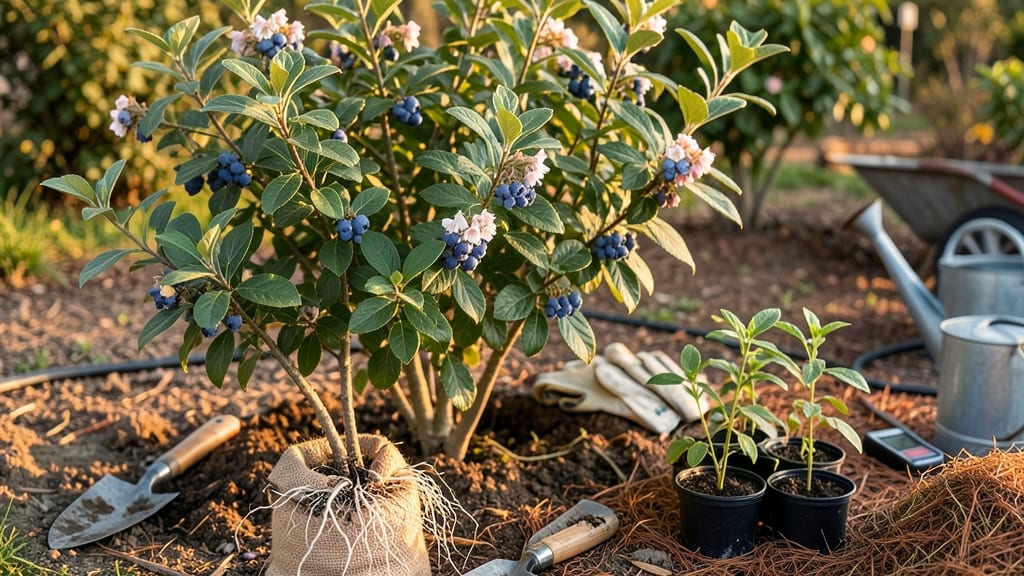
Planting blueberries in Utah isn't just about picking a season—it's about matching your variety to the chill-hour zones that define your region's success.
Whether you're in frost-prone Salt Lake City or the warmer valleys of Southern Utah, timing your 🫐 bushes for dormancy or early spring growth can mean the difference between a thriving harvest and a sad, underperforming shrub.
The key to Utah blueberry planting lies in its unique climate: cold winters that satisfy chill-hour needs and hot summers that demand the right variety. Fall planting lets roots establish before winter, while spring offers a head start for varieties like 'Bluecrop' that thrive in Zone 5.
But get it wrong, and you might end up with plants struggling through Utah's alkaline soils or late frosts that nip tender new growth.
I've tested what works in Utah's diverse zones, from the high elevations of Park City to the desert-like conditions near St. George. What I'm about to share isn't just about when to plant—it's about how to set your blueberries up for years of sweet harvests with minimal fuss.
Let's cut through the guesswork and get your bushes in the ground at the perfect moment.
You'll discover the exact months that work best for your specific zone, how to prep Utah's tricky soils, and which varieties actually flourish here. Plus, I'll show you how to protect your investment from Utah's unpredictable weather patterns—so you can enjoy homegrown 🫐 without the stress.
Best planting months in Utah by chill-hour Zone (5-7)
Utah’s diverse microclimates mean your blueberry planting timeline should align with your USDA zone—whether you’re in Zone 5 (northern Utah) or Zone 7 (southern Utah). The key is planting when the soil is workable but not frozen, and the plant is dormant to reduce transplant shock.
For most of Utah, this means two ideal windows: late winter/early spring or fall.
In Zone 5 (e.g., Ogden, Park City), where winters are colder and frost lingers longer, aim for March to early April. This gives your blueberries time to establish roots before the hot Utah summers arrive.
Southern Utah’s Zone 7 (e.g., St. George, Cedar City) has milder winters, so September to October is ideal for fall planting, allowing roots to settle before winter dormancy.
🚨 CRITICAL: Avoid planting in late spring (May-June) unless you’re in a high-altitude area like Logan or Provo, where late frosts can still occur. Young blueberries are frost-sensitive and may not survive unexpected cold snaps.
For container-grown blueberries, you have more flexibility—plant anytime the soil isn’t frozen, but spring or early fall still offers the best results. Containers warm up faster in spring, so monitor for root-bound stress if planting in July or August.
🌱 Utah Blueberry Planting Timeline by Zone
| Zone | Best Planting Window | Why This Timing? | Utah Regions |
|---|---|---|---|
| 5 (Northern Utah) | March–April (spring) or September–October (fall) | Soil thaws by March; fall planting avoids summer heat stress. | Ogden, Park City, Logan |
| 6 (Central Utah) | Late March–April (spring) or late September (fall) | Balances frost risk and summer heat; avoid May planting. | Salt Lake City, Provo, Heber |
| 7 (Southern Utah) | September–October (fall) or February–March (spring) | Milder winters; fall planting avoids extreme summer heat. | St. George, Cedar City, Moab |
| Containers (Anywhere) | March–April or September–October | Flexible timing but avoid peak summer heat (June–August). | Urban patios, balconies |
💡 Pro Tip: Test soil temperature—it should be 45°F+ for safe planting.
If you’re planting bare-root blueberries (common in nurseries), do it as soon as you receive them—these plants are dormant and can sit in a cool, dark place for a few weeks, but plant within 2–4 weeks to prevent root desiccation.
For potted blueberries, you can plant year-round, but spring or fall still minimizes stress.
For high-altitude areas (e.g., above 7,000 ft), like parts of Park City or Heber Valley, push planting to late April–May to avoid late snow or frost. These regions often have a shorter growing season, so prioritize early planting for maximum yield.
🌡️ Climate Watch: Utah’s diurnal temperature swings (hot days, cold nights) can stress young blueberries. Choose a sheltered location, like near a south-facing fence or under partial shade in the afternoon, to buffer temperature extremes.
Finally, avoid planting in summer (June–August) unless you’re in a cooler microclimate (e.g., shaded areas or high elevation). The intense Utah sun and heat can cause transplant shock, leading to poor establishment and reduced fruiting the following year.
Best planting months in Utah by chill-hour Zone (5-7)
Utah’s chill-hour zones (5-7) determine the best time to plant blueberries, but elevation and microclimates play a huge role. In Zone 5 (northern Utah, like Ogden or Park City), aim for late fall planting—September to October—when soil temps drop below 60°F.
This lets roots establish before winter dormancy. Southern Utah’s Zone 7 (St. George, Cedar City) favors early spring (March-April) to avoid summer heat stress.
For high-altitude areas (e.g., Logan, Provo), wait until late April to avoid late frosts. Container growing extends your window—plant in May if using pots, since they warm up faster.
Always check your local last frost date (typically March 15 in northern Utah, March 1 in southern Utah) to time planting perfectly.
| Zone & Location | Best Planting Window | Key Considerations |
|---|---|---|
| Zone 5 (Ogden, Park City, Logan) | Late September–October (fall) | Soil temps <60°F; protect from late frosts with mulch. |
| Zone 6 (Salt Lake City, Provo) | March–April (spring) or September (fall) | Spring: plant after last frost; fall: 6 weeks before first frost. |
| Zone 7 (St. George, Cedar City) | March–April (spring only) | Avoid summer heat; use shade cloth if planting late. |
| Containers (Any Zone) | May (warmer soil) | Use acidic potting mix; move to partial shade in summer. |
Fall planting in Zone 5-6 gives roots a head start, but bare-root plants must be planted before soil freezes. In Zone 7, spring planting avoids summer drought stress. Pro tip: Soak roots for 2 hours before planting to reduce transplant shock—critical in Utah’s dry climate.
Utah’s alkaline soils (pH 7.5-8.5) are deadly for blueberries, which need acidic soil (pH 4.5-5.5). Test your soil 4-6 weeks before planting to amend with peat moss or sulfur.
In sandy soils (common in southern Utah), mix in compost to retain moisture. Mulch with pine needles to maintain acidity and suppress weeds.
If planting in late spring (May), choose dwarf varieties like ‘Top Hat’ for faster establishment. For high-elevation areas, delay until soil warms to 50°F to prevent root rot. Always plant on a slight slope to improve drainage—critical in Utah’s flash-flood-prone regions.
Remember: Blueberries are self-pollinating, but planting two varieties (e.g., ‘Bluecrop’ + ‘Duke’) boosts yields by 30-50%. In Utah’s short growing season, this matters! 🫐