
Plants
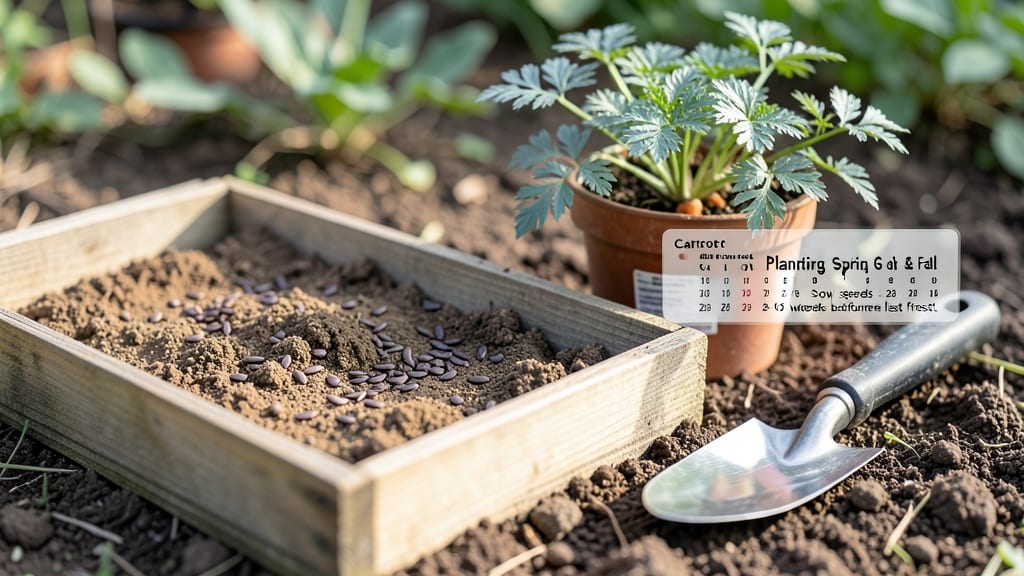
Timing your 🥕 carrot planting in Northern California isn’t just about the calendar—it’s about outsmarting the region’s wild swings from coastal fog to Central Valley heat.
Plant too soon, and a late frost will turn your tender seeds to mush; wait too long, and summer’s relentless sun will leave you with bitter, stringy roots instead of sweet harvests.
I’ve learned the hard way that February through March is your golden window for spring plantings, but inland areas can push that back until April. The key? Watch for soil temperatures hitting 50–65°F—that’s when those tiny seeds finally wake up from dormancy.
Coastal gardeners get a head start, while Central Valley growers might need to wait until March to avoid bolting.
But here’s the game-changer: fall planting (August–September) lets you sneak in a second crop before winter sets in. With the right variety—like cold-hardy ‘Danvers’—you can harvest crisp roots well into November. The trick is balancing frost dates, soil prep, and even shade cloth for summer’s scorching inland heat.
Ready to stop guessing and start growing? I’ll break down the exact planting schedules for your microclimate, plus pro tips to beat bolting and pests. Let’s get those 🥕 carrots thriving—no more wasted seeds or woody disappointments.
Northern California carrot planting calendar by microclimate zone
Northern California’s microclimates create wildly different growing conditions—coastal areas like San Francisco stay cool year-round, while inland Sacramento bakes in summer. To nail your carrot planting, align with your USDA Zone (8a-9b) and local frost dates.
Coastal zones (e.g., Monterey) can plant earlier than inland areas, where heat stress shortens the growing window.
Carrots thrive when soil temperatures hit 50–65°F. Use a soil thermometer to confirm readiness—cool soil slows germination, while hot soil causes bolting. In Northern California, this typically means waiting until March for spring and August for fall plantings, but coastal gardeners can start 2–3 weeks earlier.
Here’s your microclimate-specific planting calendar, tailored to Northern California’s four key regions:
For coastal gardeners, start seeds indoors in January for a head start—cool nights slow growth, but indoor starts compensate. Inland areas should wait until after last frost (typically March 15 in Sacramento) to avoid frost damage.
Use a frost calendar like the Almanac’s First Frost Map to refine your timing.
Soil prep is critical: carrots hate rocky or clay-heavy soil (common in the Central Valley). Amend with compost and sand to loosen texture. Test your soil’s pH (6.0–7.0 ideal)—acidic soil causes forked roots.
In Mountain zones, add extra compost to improve drainage, as cooler temps slow decomposition.
Pro tip: Succession planting every 2–3 weeks ensures a continuous harvest. In coastal areas, you can squeeze in 3–4 plantings per year; inland, 2 plantings (spring/fall) work best. For summer protection in hot zones, use 30% shade cloth to keep soil temps below 80°F.
Timing isn’t just about frost—it’s about day length. Carrots bolt (go to seed) when days get too long (14+ hours). In Northern California, this happens by late May inland and June coastally. Plan fall plantings to harvest before first frost (Nov 15)
How to extend carrot season: successive planting strategies for northern CA
Northern California’s long growing season might seem ideal, but summer heat and winter chills can derail your carrot dreams. The secret? Successive planting—sowing seeds every 2–3 weeks to keep your harvest fresh from spring to fall.
This method ensures you avoid the bolting (premature flowering) triggered by heat or the stunted growth caused by early cold snaps.
Start with cold-hardy varieties like ‘Danvers’ or ‘Nantes’ for early spring and late fall plantings. These varieties tolerate cooler soil temperatures (down to 40°F) better than heat-sensitive types.
For summer, opt for shorter-day varieties like ‘Little Finger’ to prevent bolting when days grow long.
Here’s how to time your plantings for maximum success:
For hot inland areas (e.g., Sacramento, Stockton), mulch heavily with straw or wood chips to keep soil cool and moist. In coastal foggy zones (e.g., San Francisco), watch for slugs—they thrive in damp conditions. Set out beer traps or use copper barriers to protect young seedlings.
Pro tip: Interplant carrots with radishes (they mature faster and mark carrot rows) or onions (deter carrot flies). Avoid planting near dill or parsley, which attract pests that love carrots.
With this strategy, you’ll enjoy homegrown carrots from April through December—no grocery store in sight! 🥕