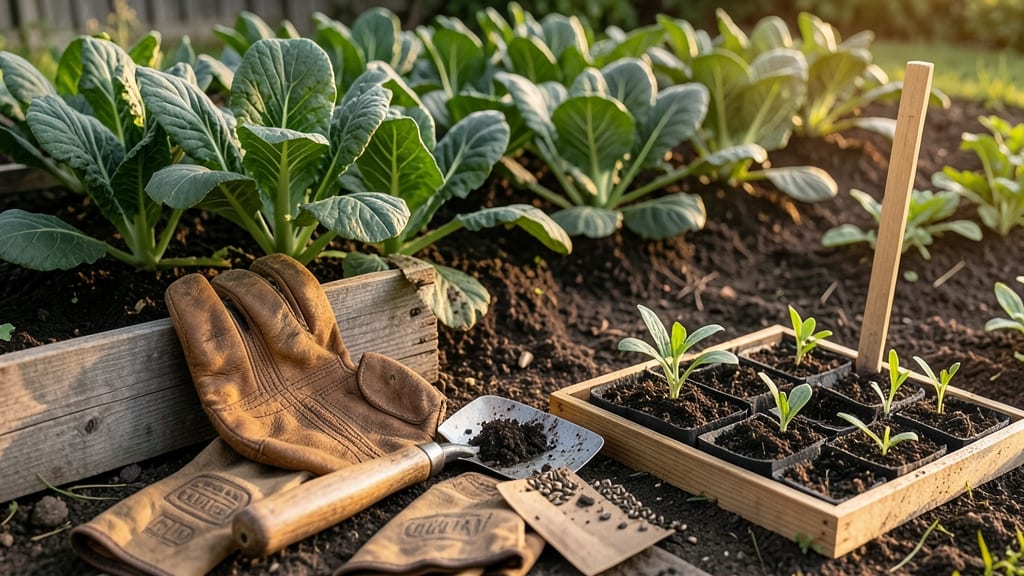
Planting collard seeds at the wrong time in North Carolina can mean the difference between a thriving harvest and a sad, wilted 🥬 pile—but getting the timing right is simpler than you think.
With NC’s 7a-8b climate, you’ve got two perfect windows: early spring and late summer. Miss either, and you’ll either fight frost damage or watch your plants bolt in summer heat. I’ll show you exactly when to start seeds indoors or sow directly for maximum success.
Most gardeners in your zone focus only on spring planting, but fall collards are where the real magic happens. They taste sweeter after frost and keep producing until winter—if you plant them at the right moment.
Let’s break down the exact frost-free windows by zone so you never miss a harvest.
You’ll also discover how to extend your growing season with row covers and heat-resistant varieties, plus the 3 biggest mistakes NC gardeners make (and how to avoid them). Ready to grow collards that last?
Jan
❄️
Feb
🌱
Mar
🥬
Apr
🥬
May
🌱
Jun
☀️
Jul
🌱
Aug
🥬
Sep
🥬
Oct
🌱
Nov
🍂
Dec
❄️
NC collard seed planting calendar by Zone (5b-8a)
North Carolina’s diverse climate—spanning USDA Zones 5b through 8a—means your collard seed planting timeline should align with your specific last frost dates and summer heat thresholds.
Unlike heat-sensitive greens, collards thrive in cool weather and even tolerate light frost, making them ideal for spring, fall, and winter harvests in NC.
For Zone 5b (mountain regions like Asheville), your last frost date typically falls around April 15–May 1, while Zone 8a (coastal areas like Wilmington) may see frost as late as December 15.
This creates a 100+ day window for planting, but timing directly impacts your harvest size and flavor.
Collards are biennial plants that grow best when sown 4–6 weeks before your last frost for spring harvests or 8–10 weeks before your first frost for fall/winter crops. In NC, this translates to two prime planting windows: early spring (March–April) and late summer (August–September).
The summary table below breaks down exact planting windows, harvest windows, and key climate notes for each zone. Use this as your NC collard seed planting guide to avoid common mistakes like planting too early in cold zones or too late in warm zones.
| Zone |
Last Frost Date |
Spring Planting Window |
Fall Planting Window |
Harvest Window |
Key Notes |
| 5b (Asheville) |
April 15–May 1 |
March 1–April 15 |
August 1–September 15 |
May–June, Oct–Dec |
Plant after soil reaches 50°F; use row covers for early starts. |
| 6a (Boone) |
April 1–April 15 |
February 20–April 1 |
July 15–August 30 |
April–June, Sept–Dec |
Start seeds indoors for earliest harvests; avoid summer planting. |
| 7a (Raleigh) |
March 15–March 31 |
February 1–March 15 |
July 1–August 15 |
March–May, Aug–Dec |
Ideal for year-round harvests; mulch heavily in winter. |
| 7b (Greensboro) |
March 1–March 15 |
January 20–March 1 |
June 15–July 30 |
Feb–May, July–Dec |
Use shade cloth in summer to prevent bolting. |
How to extend your collard growing season in NC
North Carolina’s hot summers and mild winters create unique challenges for growing collards year-round. But with the right strategies, you can enjoy fresh collard greens well beyond the traditional spring harvest.
The key is balancing heat tolerance and cold hardiness—collards thrive in cooler weather but struggle when temperatures climb above 85°F. Here’s how to extend your growing season like a pro.
One of the easiest ways to beat the heat is by starting seeds indoors 4–6 weeks before your last frost date. This gives seedlings a head start and lets you transplant them into the garden 2–3 weeks after the last frost (typically mid-April in most of NC).
For Zone 5b, this means sowing seeds indoors by early March to ensure they’re ready for cooler spring soil.
For a fall harvest, plant seeds directly in the garden in late July or early August. This timing ensures collards mature before first frost (late October to mid-November in most of NC).
In Zone 8a, you can even push this to early September for a late fall crop that withstands light frost—cold actually sweetens their flavor!
1. Start Indoors for Early Spring
Sow seeds 4–6 weeks before last frost (early March for Zone 5b). Use grow lights or a sunny windowsill to prevent leggy seedlings.
2. Use Row Covers for Summer Protection
Deploy floating row covers in late summer to shield plants from heat stress and pests. Remove covers during harvest to avoid tearing leaves.
3. Choose Heat-Tolerant Varieties
Opt for ‘Blue Max’ or ‘Georgia Southern’—these varieties handle warmer temperatures better than standard collards and produce larger, more tender leaves.
4. Mulch Heavily in Summer
Apply 2–3 inches of straw mulch to retain soil moisture and keep roots cool. Replenish mulch every 4–6 weeks to maintain effectiveness.
5. Succession Plant Every 2 Weeks
Sow new seeds every 2 weeks from March to August for a continuous harvest. This ensures you always have young, tender leaves ready to pick.
6. Harvest Strategically in Winter
After first frost, collards taste sweeter and more tender. Harvest outer leaves first to prolong the plant’s life and enjoy greens through January or February in most of NC.
Don’t overlook shade cloth as a game-changer during peak summer months. A 30–50% shade cloth can reduce soil temperatures by 10–15°F, making it easier for collards to thrive when daytime highs exceed 90°F. Hang the cloth 3–4 feet above plants to allow airflow and prevent fungal issues.
For gardeners in Zone 5b, consider cold frames or low tunnels to extend the season into early spring or late fall. These structures trap heat and protect plants from light frosts, letting you harvest well into December or even early January if winters are mild.
Just ensure proper ventilation to avoid condensation buildup and disease risks.
Pro tip: Collards are cold-hardy but not frost-proof. If temperatures dip below 20°F, use row covers or blankets to insulate plants overnight. With these strategies, you can enjoy fresh collard greens for nearly 10 months of the year—from early spring to late winter! 🌱
★★★★★4.6(1 review)