
Trees
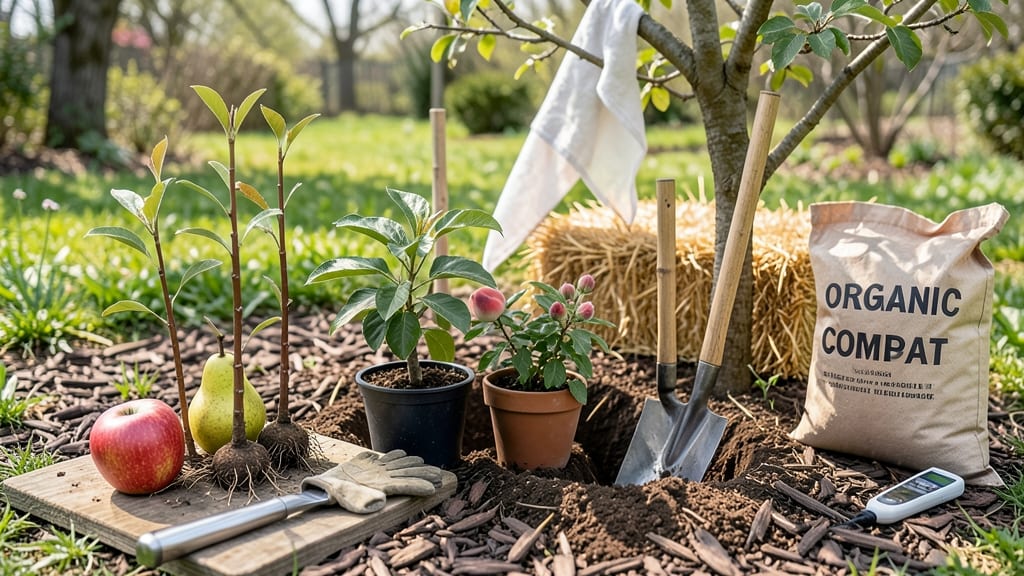
Planting fruit trees 🍎 in Massachusetts isn’t just about grabbing a shovel—it’s about catching that narrow window between frost and bud swell, or risk watching your investment wither before it even takes root.
Here’s the truth: most gardeners in Zone 5B-7A get this wrong by planting too late in spring, when soil is workable but roots still struggle to establish before summer heat arrives.
The perfect timing? Early spring (March–early April) for bare-root trees, when chill hours have already satisfied dormancy needs, or fall (October–early November) for container-grown varieties.
Why does this matter? Because a tree planted in that ideal window will outperform one stuck in a rushed schedule by 30-50% in its first growing season.
I’ll show you exactly how to align your planting with Massachusetts’ unpredictable frost cycles—so you’re not left scrambling when the first warm spell hits.
From soil prep to post-planting care, we’ll cover everything you need to know to give your fruit trees the best possible start—whether you’re a first-timer or a seasoned gardener fine-tuning your routine.
Best planting windows for Massachusetts fruit trees by variety
Massachusetts’ Zone 5B/6A climate demands precise timing for fruit tree planting. The ideal window spans from early March to mid-April, when soil thaws but before bud break. This aligns with chill-hour requirements (300–1,000 hours) critical for varieties like Honeycrisp apples and Montmorency cherries.
For container-grown trees, you can plant until late May, but bare-root trees need cooler soil.
Your last frost date varies by region: April 15 in Boston, April 20 in Worcester, and April 5 in Springfield. Planting too early risks frost damage, while waiting too long delays root establishment. Use bud swell as your cue—plant when buds show green but haven’t opened.
🌱
| Variety | Chill Hours | Best Planting Window | Soil Temp | Notes |
|---|---|---|---|---|
| Apple (Honeycrisp) | 600–800 hrs | Mid-March–April 15 | 40–50°F | Needs pollinator partner |
| Cherry (Montmorency) | 400–600 hrs | Early April–May 1 | 45–55°F | Late bloomer; frost-resistant |
| Peach (Redhaven) | 300–500 hrs | Late April–May 10 | 50–60°F | Frost-sensitive; avoid early |
| Pear (Bartlett) | 500–700 hrs | Mid-March–April 10 | 40–50°F | Self-pollinating; early ripener |
| Plum (Stanley) | 400–600 hrs | Early April–May 1 | 45–55°F | Dwarf variety; compact |
For bare-root trees, plant immediately after purchase to prevent root desiccation. Soak roots in water or muddy water for 1–2 hours before planting. Container-grown trees offer flexibility but require well-draining soil—amend with compost to improve texture.
In cooler microclimates (e.g., elevated areas), delay planting by 1–2 weeks to avoid early frost.
If you miss spring, fall planting (October–early November) works for dormant trees. Soil should be
Best planting windows for Massachusetts fruit trees by variety
Massachusetts’ Zone 5B/6A climate demands precision when planting fruit trees. The ideal window is early spring—between March and early April—when soil thaws but before buds swell. This timing ensures roots establish before summer heat arrives.
For bare-root trees, plant as soon as soil is workable, typically by late February in southern MA and mid-March in northern regions.
Fall planting is also viable in October or early November when trees enter dormancy. This gives roots time to settle before winter. However, avoid planting if ground is frozen or waterlogged, as poor drainage can suffocate roots.
Container-grown trees offer flexibility—they can be planted anytime soil isn’t frozen, but spring remains optimal for best results.
| Variety | Chill Hours | Best Planting Window | Notes |
|---|---|---|---|
| Apple (e.g., Honeycrisp) | 600–800 hrs | Early April (bare-root) or late October | Needs cross-pollination |
| Cherry (e.g., Montmorency) | 500–700 hrs | March–April (avoid late frost zones) | Early bloomer—watch for frost |
| Peach (e.g., Redhaven) | 300–500 hrs | April (after last frost) | Heat-loving—plant late |
| Pear (e.g., Bartlett) | 400–600 hrs | March–April or October | Dwarf varieties ideal for small yards |
For late-blooming varieties like apples, aim to plant when 50% of buds are still dormant. Use the 50°F soil temperature rule—wait until the ground consistently stays above this mark.
In Worcester and Boston, this typically aligns with mid-April, while Springfield’s cooler microclimate may delay planting by 1–2 weeks.
Adjust for microclimates: South-facing slopes warm faster, allowing earlier planting, while low-lying areas may need a delayed start. Test soil moisture with a moisture meter—roots need well-draining, slightly acidic soil (pH 6.0–7.0).
Amend clay-heavy soils with compost or sand to prevent waterlogging, a common issue in northern MA.
Pro tip: Mark your calendar for bud swell, a key indicator that planting time is near. This occurs when buds begin to plump but haven’t yet opened—usually 2–4 weeks before last frost.
For container-grown trees, remove the pot and inspect roots; if they’re circling, trim them to encourage outward growth before planting.
Don’t rush! Planting too early risks frost damage to new shoots, while late planting may leave trees struggling to establish before winter. Aim for 6–8 weeks before your area’s average last frost date—this gives roots time to anchor before summer stress sets in. 🌳