
Plants
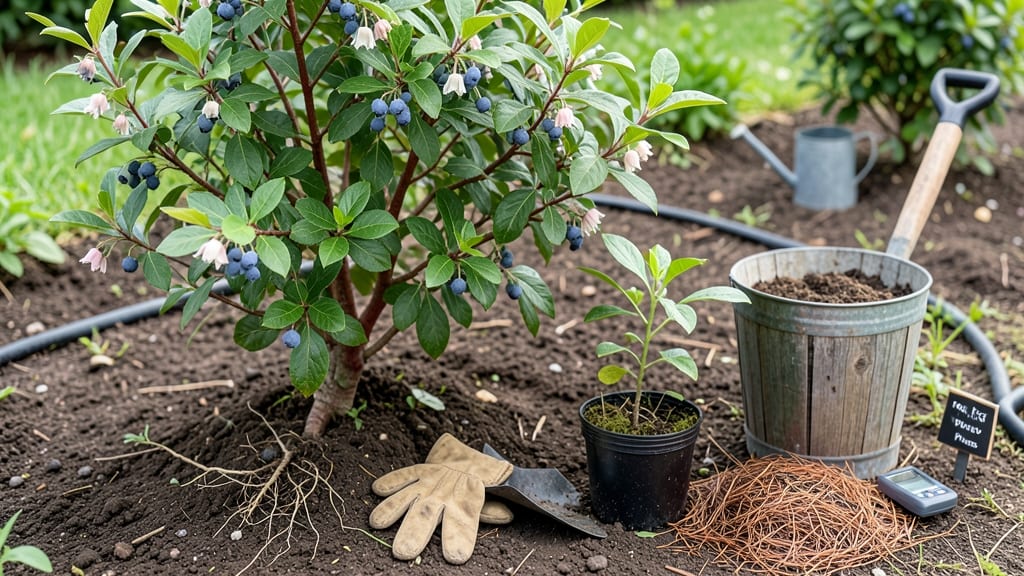
Planting blueberries in New Jersey isn’t just about grabbing a bush and sticking it in the ground—it’s about matching your variety to the 500–1,000 chill hours your local climate demands, or risking years of frustration. The wrong timing means weak growth, sparse berries, or worse, no harvest at all.
But here’s the good news: with NJ’s Zone 6B climate, you’ve got two prime windows to get it right—spring and fall—each with its own advantages.
Most gardeners in NJ swear by fall planting (October–November), when the soil is still warm but the air cools just enough to encourage strong root establishment before winter.
However, late spring (after your last frost, typically late April–early June) works too, especially if you’re dealing with container-grown bushes that need to establish roots before summer heat hits. Either way, the key is acting before the first frost in mid-October or after the last one in mid-April.
Why does this matter? Because blueberries are finicky—they need acidic soil (pH 4.5–5.5), full sun, and the right chill hours to produce fruit. Skip the prep work, and you’ll end up with a shrub that looks healthy but never bears those juicy 🫐 berries you’re craving.
I’ll walk you through exactly how to pick the right variety for your NJ microclimate, prep your soil, and time your planting for maximum success—so you can start harvesting in July or August.
Let’s cut to the chase: the best time to plant blueberries in NJ depends on your variety, your soil, and whether you’re ready to commit to the 3–5 years it takes for a bush to mature.
But with the right approach, you’ll be enjoying homegrown berries in no time—no more guessing, just proven strategies tailored to your backyard. Ready to get started?
NJ blueberry planting timeline: chill-hours vs. last frost dates
New Jersey’s Zone 6B climate creates a narrow but critical window for planting blueberries—one that balances chill-hour requirements (500–1,000 hours) with avoiding late frosts. The ideal planting window spans late April through early June (after last frost) or October through November (fall planting).
Missing this window risks stunted growth or frost damage, delaying your harvest by years.
Blueberries need chill hours (cold winter temperatures) to set fruit, and NJ’s 500–1,000 chill-hour range dictates which varieties thrive. Southern highbush varieties (500–700 hours) suit South Jersey, while northern highbush (700–1,000 hours) work better in North Jersey’s cooler microclimates. Aligning planting with chill-hour needs ensures your bushes fruit reliably.
NJ’s average last frost date falls between April 15 and May 1, but microclimates vary. Coastal areas (e.g., Cape May) may see frost-free soil by early April, while inland (e.g., Sussex County) can wait until mid-May.
Always check local frost data from the NJ State Climatologist or plant after your area’s last frost.
Spring planting (April–June) gives bushes time to establish roots before summer heat, while fall planting (October–November) allows roots to grow in cool soil. Both methods work, but fall planting is often preferred in NJ for reduced transplant shock and earlier fruiting.
Here’s how to match your planting timeline to NJ’s climate:
For spring planting, aim for late April to early May in North Jersey or early April to mid-April in South Jersey’s coastal areas. In fall, plant 6–8 weeks before first frost (typically by October 15), giving roots time to establish before winter.
Use bare-root plants for spring or container-grown bushes for fall to reduce transplant shock.
NJ’s first frost usually arrives in mid-October, so fall planting must wrap up by early November. If you miss this window, wait until spring—but be prepared for a delayed first harvest. Always test your soil’s pH (4.5–5.5) before planting, as NJ’s native soil is often too alkaline for blueberries.
Pro tip: Use a chill-hour calculator (like the one from the Rutgers Cooperative Extension) to confirm your variety’s needs. For example, ‘Bluecrop’ (700–900 hours) thrives in North Jersey, while ‘Duke’ (500–700 hours) suits South Jersey’s milder winters.
Timing isn’t just about frost—it’s about giving your blueberries the perfect chill-hour match for your NJ location. Plant at the right time, and you’ll enjoy juicy, homegrown berries in 2–3 years instead of waiting decades.
Critical mistakes to avoid when planting blueberries in NJ’s climate
Planting blueberries in New Jersey’s Zone 6B is easier when you know what pitfalls to avoid. One common mistake is planting too early—before the last frost date (April 15–May 1).
Young roots can’t handle freezing temperatures, and even hardened bushes may struggle. Always check the NJ State Climate Office for your specific region’s frost dates.
Another frequent error is ignoring the soil pH requirement (4.5–5.5). Blueberries thrive in acidic soil, and NJ’s native soil is often alkaline. Without testing and amending, your bushes won’t grow well, no matter how well you plant them. Grab a soil pH test kit before digging—it’s a game-changer.
Many gardeners also skip the step of planting both male and female varieties (if not using self-pollinating types). Without cross-pollination, you’ll end up with fewer berries or none at all. Check the variety tags—some, like ‘Bluecrop’, are self-pollinating, but others need a partner.
Overwatering is another silent killer. While blueberries need consistent moisture, soggy soil leads to root rot. Water deeply but only when the top 2 inches of soil are dry. A moisture meter helps avoid guesswork, especially in NJ’s humid summers.
Finally, don’t forget to prune correctly. Removing old wood in late winter helps airflow but avoid heavy pruning in fall—it stresses the plant before winter. And never plant blueberries near walnut trees, as their roots release juglone, a toxin that stunts growth.
By avoiding these mistakes, your blueberries will establish strong roots, produce abundant berries, and thrive in NJ’s climate—no guesswork required. Happy planting! 🌱💧