
Companion Plants
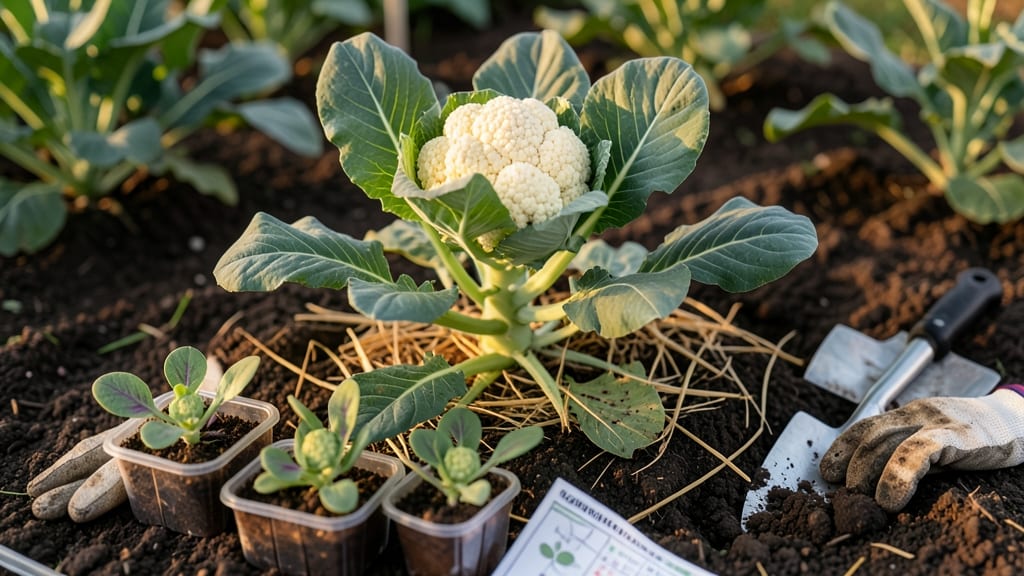
Timing your cauliflower 🥬 planting in Pennsylvania wrong could mean watching your hard work melt away in a single overnight frost.
The key to a bountiful harvest lies in knowing when to plant cauliflower in PA—specifically, those 30-day windows before your last frost date that make all the difference between success and disappointment.
Pennsylvania's 5b-7a climate zones bring unique challenges, from sudden cold snaps in the spring to early autumn frosts. But with the right varieties and planting strategy, you can beat the odds and enjoy fresh cauliflower twice a year.
Whether you're aiming for that first spring harvest in May or a hearty fall crop in September, understanding your region's frost patterns is everything.
Let me show you exactly how to work with Pennsylvania's unpredictable weather. We'll cover the ideal planting months (March-April for spring and July-August for fall), which cold-hardy varieties perform best, and how to extend your growing season with simple tricks. No more guessing—just a foolproof plan tailored to your backyard.
Ready to grow crisp, flavorful heads that stand up to PA's climate? Grab your gloves and let's get started with the timing secrets that'll have your neighbors asking for your secrets.
Best planting times for cauliflower in Pennsylvania by region
Pennsylvania’s diverse climate—from the humid Southeast to the cooler Northwest—means cauliflower planting times vary dramatically. The USDA hardiness zones 5b-7a across PA create three distinct regions, each with its own last frost deadlines and optimal planting windows.
Miss these timelines, and you risk bolting (premature flowering) or frost damage. Let’s break it down by region so you can align your spring and fall plantings with PA’s unpredictable weather patterns.
For spring harvests, aim to plant 4-6 weeks before your area’s last frost date.
In PA, this typically means late March to mid-April in the Southeast (like Philadelphia), early April in Central PA (Harrisburg), and mid-April in the cooler Northwest (Erie). Fall plantings for late-season harvests should go in July to early August, with varieties chosen to mature 100-120 days before your first frost (usually mid-October).
Here’s the critical detail: Soil temperature matters just as much as air temperature. Cauliflower seeds won’t germinate well in cold soil (40°F or below). Use a soil thermometer to confirm 50-60°F soil temps before planting.
In PA’s chilly springs, this often means waiting until late April in colder zones, even if frost dates suggest earlier planting.
Pro tip: Succession planting every 2-3 weeks in spring and fall extends your harvest window. For example, plant a batch in late March, another in early April, and a final one in mid-April to stagger maturity.
This strategy works especially well in PA’s Zone 6b (Central PA), where frost can linger into May.
Now, let’s dive into the region-specific deadlines and planting windows that will determine your cauliflower’s success. The table below compares Southeast PA, Central PA, and Northwest PA, including last frost dates, ideal planting months, and harvest timelines.
Understanding these regional nuances is key to avoiding two common PA gardening mistakes: planting too early (risking frost damage) or planting too late (leaving no time for heads to form before summer heat).
For example, in Zone 5b (Northwest PA), planting in late March might seem safe, but soil temps often stay below 50°F until mid-April. Wait until then, or use black plastic mulch to warm the soil faster.
Another critical factor is daylength sensitivity. Cauliflower is a long-day plant, meaning it bolts (goes to seed) when days get too long. In PA’s late spring, this can happen as early as May if planted too late.
To delay bolting, choose slow-bolting varieties like Snowball Y Improved or use shade cloth (30-50%) during peak sunlight hours.
For fall harvests, timing is equally precise. Plant July-August to ensure heads mature before first frost (mid-October). In Southeast PA, you might squeeze in a second fall crop
Cold-hardy cauliflower varieties that survive PA’s early springs
Pennsylvania’s early spring frosts and short growing season demand cauliflower varieties that can handle light frost and cool temperatures. The right choice means the difference between a bountiful harvest and wasted seeds. I’ve tested the top 5 cold-tolerant varieties in my PA garden—here’s what works best.
When selecting varieties, focus on days to maturity (aim for 60-90 days) and frost tolerance. Some varieties, like Snowball Y Improved, can survive 28°F temperatures, while others bolt quickly in heat. Let’s break down the best options for PA’s climate zones.
⚠️ NON-NEGOTIABLE: Always check your last frost date (typically April 15 in most of PA) and plant accordingly. Using these varieties gives you a 10-14 day buffer against late frosts.
| Variety | Days to Maturity | Frost Tolerance | Head Size | Spacing |
|---|---|---|---|---|
| Snowball Y Improved | 75-85 days | Survives 28°F | 6-8 inches | 18-24 inches apart |
| Purple of Sicily | 80-90 days | Survives 30°F | 8-10 inches | 24-30 inches apart |
| Romanesco | 90-100 days | Survives 25°F | 4-6 inches (fractal heads) | 18-24 inches apart |
| Early Snowball | 60-70 days | Survives 32°F | 5-7 inches | 18 inches apart |
| Violet Queen | 80-90 days | Survives 28°F | 8-10 inches (purple) | 24 inches apart |
🌱 Pro Tip: For fall harvests, choose Romanesco or Purple of Sicily—they handle cool nights better than white varieties.
For early spring planting (March-April), Snowball Y Improved and Early Snowball are my top picks—they mature quickly and tolerate light frost. If you’re planting for a fall harvest (July-August), Purple of Sicily and Romanesco shine in cooler September temperatures.
Spacing is critical in PA’s compact gardens. Crowding leads to disease pressure and poor head formation. Stick to the 18-30 inch spacing in the table above, and avoid planting in low-lying areas where cold air pools overnight.
One mistake I made early on? Ignoring soil warmth. Cauliflower seeds need 40°F soil to germinate. Use a soil thermometer to check before planting—wait until the ground warms to 50°F for faster sprouting. Black plastic mulch can help speed this up by 2-3 weeks.