
Trees
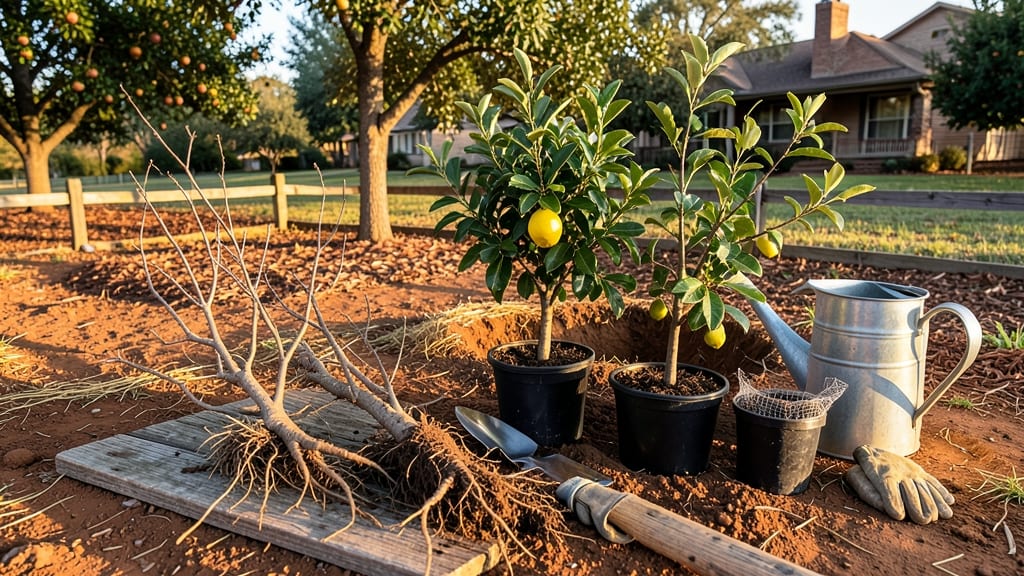
Planting your 🍎 fruit tree in Texas at the wrong time can mean struggling with weak roots, stunted growth, or even losing your investment to extreme heat or frost. With Texas' unpredictable climate—from freezing North Texas winters to scorching South Texas summers—getting the timing right is the key to success.
Most gardeners in zones 8a-10b swear by late winter to early spring as the best window, but there’s more to it than just picking a month.
The last frost date in your area (like February 15 in North Texas or January 15 in South Texas) sets the stage for when your tree can safely go into the ground without risking frost damage.
In this guide, I’ll break down the exact months that work best for your specific zone, including why citrus trees thrive year-round while stone fruits like peaches need that early spring window.
You’ll also learn how to prep your soil and care for your tree after planting to give it the strongest start possible.
Ready to plant with confidence? Let’s dive into the science—and the secrets—of timing your fruit tree for a bountiful harvest in Texas.
Texas fruit tree planting calendar by hardiness zones (8a-10b)
Texas spans USDA hardiness zones 8a through 10b, meaning frost dates and planting windows vary dramatically from the Panhandle to South Texas. In North Texas (zones 8a-8b), your last frost typically hits around February 15, while South Texas (zones 9a-10b) rarely sees frost after January 15.
This variation means your optimal planting window shifts from late February in the North to early March in the South.
For bare-root trees, aim to plant within 2-4 weeks of dormancy breaking—usually February to early March—when soil temperatures hit 60°F+. Container-grown trees offer more flexibility, allowing planting through April, but avoid peak summer heat (May-July) when roots struggle to establish.
Citrus trees (oranges, lemons, grapefruits) are the exception—they thrive in South Texas (zones 9b-10b) and can be planted year-round, though fall (September-November) is ideal to avoid summer stress. In North Texas, citrus should only be planted in containers and moved indoors during winter.
Pecan trees (Carya illinoinensis) prefer North and Central Texas (zones 7b-9a) and should be planted in late winter (February-March) when soil is workable but frost risk has passed. Fig trees (Ficus carica) are more adaptable, tolerating fall planting (September-October) in cooler zones.
Peach and plum trees (Prunus persica, Prunus domestica) need chill hours (300-600 hours below 45°F) to fruit well, making them best suited for North and Central Texas. Plant them in February-March to ensure they meet chill requirements before summer heat arrives.
| Zone | Last Frost | Ideal Planting Month | Best Fruit Trees | Soil Temp for Planting |
|---|---|---|---|---|
| 8a-8b (North TX) | Feb 15 | Late Feb - Early Mar | Pecan, Peach, Plum, Apple | 60°F+ |
| 9a-9b (Central TX) | Jan 15 | Early Mar - Mid-Apr | Fig, Persimmon, Pecan, Citrus (containers) | 65°F+ |
| 10a-10b (South TX) | None (rare frost) | Sep-Nov or Feb-Mar | Citrus, Mango, Loquat, Pomegranate | 70°F+ |
🌱 Pro Tip: Use Texas A&M AgriLife Extension frost maps for your exact county.
If you miss the spring window, some trees—like figs and persimmons—can handle fall planting (September-October), giving roots time to establish before summer heat. However, avoid planting in summer (June-August) when evaporation rates exceed 0.25 inches/day, making root establishment nearly impossible.
For container-grown trees, the window extends to April in most zones, but prioritize morning planting to reduce transplant shock. Always check the root flare—the swollen area at the base—should sit 1-2 inches above soil level to prevent rot.
Texas’ clay-heavy soils can bake hard in summer, so amend planting holes with compost and sand to improve drainage. In South Texas, where humidity is high, add sulfur or peat moss to prevent fungal diseases during root establishment.
Monitor your local Almanac frost predictions and adjust planting dates if an unusually early frost is forecasted. In North Texas
Critical signs you’re planting fruit trees at the wrong time in Texas
Texas’ unpredictable climate—from sudden freezes in North Texas to scorching summer heat—means planting fruit trees at the wrong time can spell disaster. One of the first red flags is yellowing leaves or stunted growth within weeks of planting, signaling root stress from either late frost damage or heat shock.
If your tree’s leaves curl or drop prematurely, it’s likely struggling with transplant shock combined with poor timing.
Another warning sign is fungal infections, like powdery mildew or root rot, which thrive in overly wet soil during Texas’ humid summers. Planting in May or June without proper mulching or drainage can turn your orchard into a fungal hotspot.
Even citrus trees in South Texas may show brown leaf edges if planted during peak summer drought without adequate irrigation.
🌱
⚠️ Warning Signs of Poor Planting Timing
- Wilting leaves despite regular watering → Heat stress (planted too early in summer)
- Blackened roots or foul smell → Root rot (planted in waterlogged soil)
- Frost damage on new growth → Planted too late in fall/winter
- No new leaves for 4+ weeks → Dormancy disruption (planted in active growth phase)
Action: Prune damaged areas, adjust watering, and monitor for pests.
In North Texas (Zones 8a-8b), planting before the average last frost date (typically February 15) risks frost damage to tender roots. Look for brown, crispy leaf edges or blackened bark—classic signs your tree was planted too early.
Conversely, South Texas (Zones 9a-10b) gardeners often see heat stress if they plant after mid-April, with symptoms like drooping leaves and sunburned bark.
Even the soil temperature can reveal poor timing. If the ground feels colder than 60°F when you plant, roots won’t establish properly. Use a soil thermometer to check—ideal temps for planting are 60-70°F.
In East Texas, where humidity is high, planting in late spring without fungicide treatment can lead to anthracnose, a fungal disease that causes dark spots on leaves and fruit rot.
Don’t overlook pest outbreaks as a timing clue. If you notice aphids, scale insects, or borers within weeks of planting, your tree may be stressed from poor timing.
Weak trees attract pests, especially if planted during peak pest season (e.g., May-June for bark beetles). Pecan trees in West Texas, for example, are most vulnerable to pecan weevils if planted in late summer without protective measures.
To avoid these pitfalls, always check local frost dates and soil conditions before planting. For container-grown trees, the ideal window is February-March across most of Texas, while bare-root trees can handle late winter planting if soil isn’t frozen.
When in doubt, err on the side of early spring—your tree’s roots will thank you with stronger growth and better fruit production.
☀️